Digital Community Building: 15 Strategies for an Engaged, Loyal Community (2026)

Digital community building is the practice of creating, growing, and sustaining an owned online space where the users of an app or brand connect with each other, not just with the brand itself. It combines infrastructure decisions, such as where the community lives and how conversations are structured, with ongoing operational work: onboarding, programming, moderation, and measurement. Done well, it turns a transactional product into a place users return to daily. For a deeper look at the building blocks, see our guide to 15 must-have community features for any app.
Digital community building is the practice of creating, growing, and sustaining an owned online space where the users of an app or brand connect with each other, not just with the brand itself. It combines infrastructure decisions, such as where the community lives and how conversations are structured, with ongoing operational work: onboarding, programming, moderation, and measurement. Done well, it turns a transactional product into a place users return to daily. For a deeper look at the building blocks, see our guide to 15 must-have community features for any app.
The strategy is no longer experimental. According to the CMX Community Industry Report (2025), 24% of community teams can now confidently quantify the business value of their community, a record for the survey, and over a third of those report more than $1 million in annual impact. This guide breaks down 15 digital community building strategies, the category each belongs to, and the metric each is designed to move.
How we chose these 15 strategies
A strategy makes the list if a community team can put it into practice on any platform and it moves one metric the team can track, which is why each row in the table below names that metric. Where we cite an example, it is a long-running, publicly documented program, and every statistic comes from a primary source such as the CMX Community Industry Report. Disclosure: social.plus publishes this blog and builds the kind of infrastructure discussed here.
Digital community building strategies at a glance
Every strategy maps to one of four categories and one primary metric. Start with Foundation, layer in Engagement, then invest in Growth and Operations as the community matures.
| Strategy | Category | Primary metric to move |
|---|---|---|
| 1. Define your community's purpose and values | Foundation | New member activation rate |
| 2. Create a welcoming environment | Foundation | First-week retention |
| 3. Encourage regular participation | Engagement | DAU/MAU ratio |
| 4. Foster member-generated content | Engagement | Posts per active user |
| 5. Facilitate meaningful connections | Engagement | Connections per user |
| 6. Implement gamification elements | Engagement | Streaks and repeat sessions |
| 7. Actively listen and respond | Operations | Post response time |
| 8. Provide exclusive content and resources | Engagement | Event attendance |
| 9. Encourage user-generated challenges | Growth | User-initiated activities |
| 10. Analyze data and iterate | Operations | Content engagement rate |
| 11. Build a strong moderation team | Operations | Report resolution time |
| 12. Measure engagement metrics | Operations | Active member count |
| 13. Recognize and reward engagement | Engagement | Contributor retention |
| 14. Offer ongoing learning opportunities | Growth | Program completion rate |
| 15. Stay adaptable and responsive | Growth | Feature adoption |
15 strategies for your digital community
These strategies work across community platforms and formats, and each pairs a concrete tactic with an example or benchmark to measure yourself against.
1. Define your community's purpose and values
Before you invest in engagement tactics, write down what the community exists to do and what behavior it rewards. Answer two questions in one sentence each: what do members get from participating, and what principles govern how they interact? LEGO Ideas is a useful reference point: fans submit and vote on set designs, and winning concepts become real products. That clarity tells every new member why they are there. Publish your purpose in the community itself, and reference it in moderation and programming decisions.
2. Create a welcoming environment
First impressions decide whether a new member ever returns, so treat onboarding as a designed experience rather than an empty room. Give newcomers a visible first action: an introduction thread, a starter question, or a channel where posting feels low-stakes. Many Discord communities do this well, using welcome channels and onboarding prompts that route new members to relevant spaces. Members who post in their first session return at a far higher rate than those who do not, so engineer your onboarding to produce that first post and track first-week retention as your signal.
3. Encourage regular participation
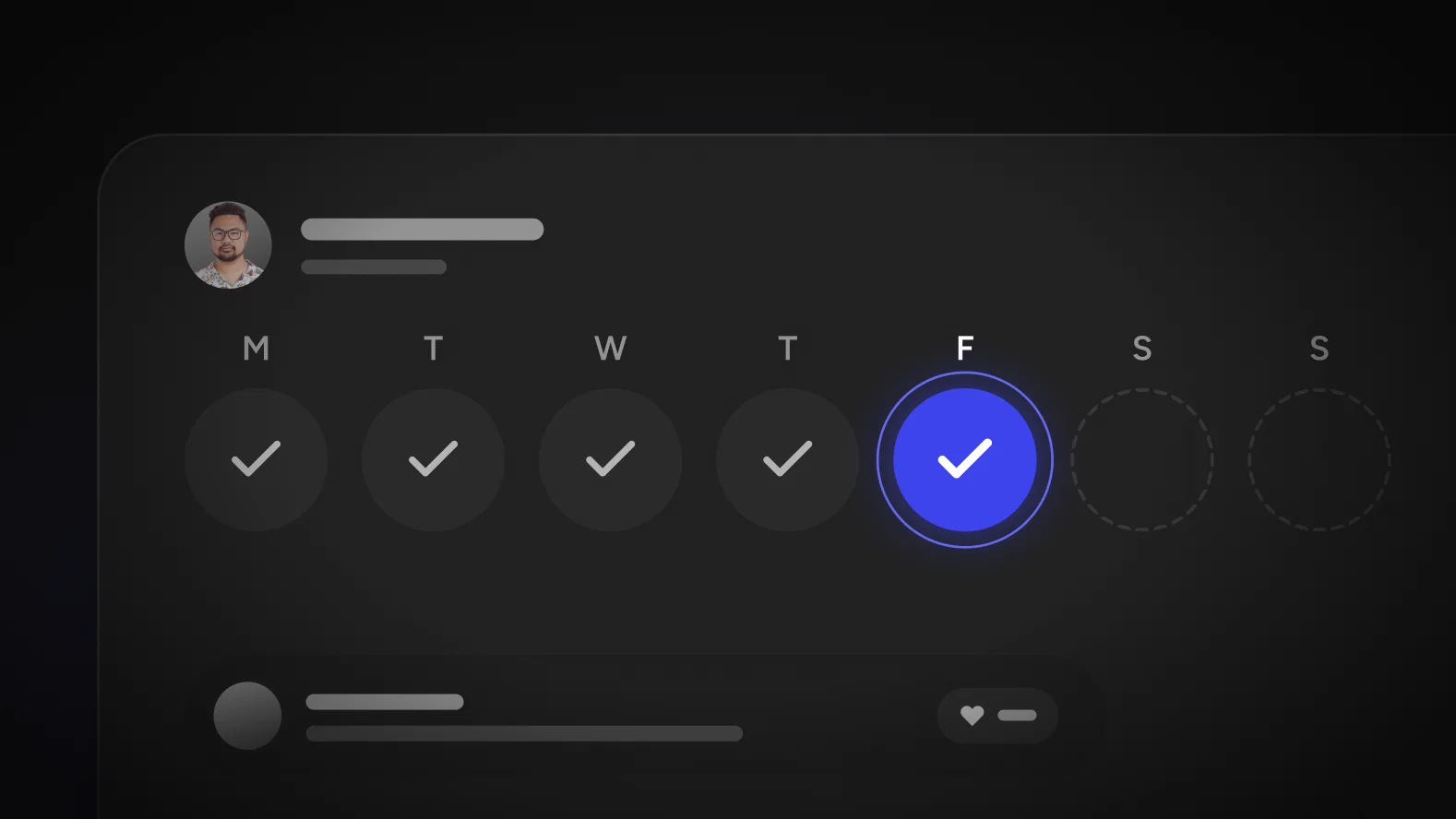
Consistency beats intensity in community programming. Recurring events, challenges, and themed discussions give members a reason to return on a schedule instead of drifting in occasionally. Strava is the benchmark here: its monthly challenges give athletes a standing reason to log activity, and the company passed 150 million registered athletes in mid-2025 (Strava, 2025). You do not need Strava's scale to copy the mechanic. A weekly thread or monthly challenge with visible progress moves your DAU/MAU ratio, the cleanest measure of habitual participation.
4. Foster member-generated content
A community where only the brand posts is a newsletter with extra steps. Empower users to contribute knowledge, reviews, and experiences, and make contribution the default. Sephora's Beauty Insider Community is built almost entirely on member-generated content: reviews, photos, and peer answers carry the space. To replicate this, lower the friction to contribute with prompts and templates, and showcase the best contributions prominently. According to the CMX Community Industry Report (2025), new user-generated content is the top health metric for content-focused communities, tracked by 47% of them.
5. Facilitate meaningful connections
Members stay for the relationships, not the content library. Create structured spaces where users with shared interests can find each other: subgroups by topic, location, or experience level, plus profiles and follows so connections persist. Goodreads demonstrates the pattern with its member-run groups, where readers organize around genres and shared reading lists no central team could program. Seed the first wave of groups yourself, then hand ownership to active members. Measure connections per user; a community where the median member has zero connections is a broadcast channel, not a community.
6. Implement gamification elements
Gamification works when it rewards the behavior you actually want repeated, not raw activity volume. Badges, points, streaks, and leaderboards give members visible progress and a reason to return tomorrow. Duolingo remains the canonical example: streaks and leagues are core to a product that reached 56.5 million daily active users in Q1 2026, up 21% year over year (Duolingo, 2026). Start small, with a streak for consecutive days of participation or badges for first contributions, and pair rewards with clear guidelines so the incentives do not invite spam.
7. Actively listen and respond
Members who feel heard stay; members who post into silence leave. Set an internal service-level target for responding to questions and feedback, and make sure every first post from a new member gets a reply. Post response time is an established health metric, tracked by 20% of teams in the CMX Community Industry Report (2025), and it is one a small team can improve immediately. Close the loop publicly: when member feedback changes your product or programming, say so in the community. That habit compounds trust faster than any campaign.
8. Provide exclusive content and resources
Give members something they cannot get by lurking on your marketing site. Webinars, AMAs, early access, and expert Q&A sessions convert passive members into attendees and attendees into contributors. Reddit's AMA format is proof that access itself is the draw: the sessions work because the community gets direct time with people they could not otherwise reach. Run a monthly AMA with your product team or an industry expert, and measure repeat attendance. Exclusive does not have to mean expensive; a changelog discussion where users shape the roadmap is exclusive content.
9. Encourage user-generated challenges
The strongest communities eventually program themselves. Invite members to organize their own events, challenges, and discussion series, and give them lightweight tools to do it: event creation, group threads, and co-host permissions. GoPro has run this play for years with its award programs, where users submit footage around themes and the community supplies the creative energy. When a member-run activity succeeds, promote it through official channels so initiative is visibly rewarded. Track the share of activities initiated by users; when it rises, your community is becoming self-sustaining.
10. Analyze data and iterate
Community intuition is useful; community data is decisive. Review which content formats, topics, and events drive participation, then reallocate your programming toward what works. A practical cadence is monthly: compare engagement by content type, identify top contributors, and find the drop-off points in onboarding. Purpose-built community analytics shorten this loop by putting participation, retention, and content performance in one dashboard instead of scattered exports. The discipline matters more than the tooling: teams that review data on a schedule iterate, while teams that only pull data quarterly decorate.
11. Build a strong moderation team
Trust and safety are the foundation everything else stands on, and they do not scale on goodwill alone. Combine clear written guidelines, trained human moderators, and automated tooling that catches spam and harmful content before users see it. AI-powered moderation tooling now handles the first pass in many large communities, flagging profanity, spam, and unsafe images in real time so human moderators can focus on judgment calls. Publish your guidelines where members can see them and enforce them consistently. Report resolution time is the metric: fast, consistent enforcement is what members experience as safety.
12. Measure engagement metrics
You cannot manage a community you do not measure. Establish a small, stable set of metrics and track them on a fixed cadence: active members, participation rate, content interactions, and retention by cohort. According to the CMX Community Industry Report (2025), the number of active members is the most widely used community health metric, tracked by 84% of community teams. Resist the temptation to track everything. Pick one north-star metric per quarter, such as DAU/MAU or contributor retention, and let it drive your roadmap. Teams that measure well also defend budgets well.
13. Recognize and reward engagement
Recognition is the cheapest retention lever a community team has. Celebrate your most active and helpful members through spotlights, contributor badges, and ambassador roles with real privileges, such as early access or direct lines to your team. Microsoft's MVP program is the long-running template: it turns expert users into named, celebrated contributors who anchor entire product communities. Scale the idea down with a monthly member spotlight. Watch contributor retention specifically: losing a lurker costs you little, but losing a top contributor can take a subcommunity's momentum with it.
14. Offer ongoing learning opportunities
Communities that teach retain. Structured learning, whether workshops, courses, certifications, or mentorship programs, gives members a progression path and a concrete return on the time they invest. Salesforce's Trailhead is the reference case: free, gamified learning paths feed directly into its Trailblazer community, where learners become contributors and contributors become advocates. Start with a single recurring workshop hosted by an expert member, and measure completion rates and whether graduates participate more afterward. Learning content also compounds: every session becomes searchable exclusive content that strengthens strategy 8.
15. Stay adaptable and responsive
The formats that engaged users in 2023 are not the formats engaging them in 2026. Short video, live audio, AI-assisted experiences, and in-app communities have each shifted expectations, and communities that ignored those shifts aged quickly. Once a quarter, ask which emerging formats your members already use elsewhere and pilot one. Feature adoption is the metric that keeps this honest: if you ship a new community capability and adoption stays flat, the community is telling you something. Responsiveness to member feedback, per strategy 7, separates adaptation from chasing trends.
Community examples to learn from in 2026
The strongest digital communities in 2026 share one trait: community is part of the product, not a marketing channel bolted on afterward. These examples show what that looks like at scale.
Duolingo pairs learning with streaks, leagues, and friend quests. The model reached 56.5 million daily active users in Q1 2026 (Duolingo, 2026), with management crediting word-of-mouth and retention rather than paid acquisition.
Strava turned activity tracking into a social layer for athletes, passing 150 million registered athletes in 2025 (Strava, 2025) on the strength of clubs, segments, and challenges.
Goodreads sustains member-run groups and reading challenges that generate most of its activity.
GitHub remains the standard for contribution-based community, where status comes from what you give.
Calm shows the quieter end of the spectrum, with shared journeys and gentle social features inside a wellness product.
AI in community management
AI has moved from experiment to standard practice in community operations. According to the CMX Community Industry Report (2025), 81% of community professionals already use AI tools, up from 73% the year before, with content creation, reporting, and moderation as the leading use cases. In practice, that means AI moderation screening text, images, and video in real time, and AI copilots that summarize discussions, draft responses, and surface at-risk members before they churn. Noom and Harley-Davidson illustrate where this is heading: large in-app communities where automated safety tooling and human community teams share the workload. The teams that win with AI use it to remove repetitive work, not to replace the relationships that make a community worth joining.
Frequently asked questions
What is digital community building?
Digital community building is the practice of creating and growing an online space where a brand's users interact with each other around a shared interest or goal. It covers the infrastructure the community runs on, the programming that drives participation, and the moderation that keeps it safe. The outcome is a durable network of relationships that makes the product more valuable.
How do you build a digital community from scratch?
Start with a clear purpose, a small seed group of engaged users, and one recurring activity that gives people a reason to return, such as a weekly discussion or a monthly challenge. Invest early in onboarding and moderation so the space feels welcoming and safe before you scale. Growth follows retention: expand outreach once your first members are coming back on their own.
What makes a digital community successful?
Successful communities combine a clear purpose, consistent programming, visible recognition for contributors, and reliable trust and safety. Members generate most of the content and many of the activities, rather than depending on the brand for everything. According to the CMX Community Industry Report (2025), active membership is the most common health measure, tracked by 84% of community teams.
How do you measure community engagement?
Track a small set of metrics on a fixed cadence: active members, DAU/MAU ratio, interactions per active user, post response time, and retention by cohort. Tie at least one metric to a business outcome such as customer retention so the community's value is legible to leadership. Dedicated community analytics tools consolidate these measures in one place.
What tools do you need to build a digital community?
You need a platform where conversations happen, moderation tooling that keeps the space safe, and analytics that show what is working. Brands that want the community inside their own app typically build on community infrastructure, using SDKs and APIs with a prebuilt UIKit, rather than developing chat, feeds, profiles, and moderation from scratch. Add AI moderation and engagement tooling as volume grows.
Build your community where your users already are
The common thread across these 15 strategies is ownership. Communities that live inside your own app compound value for your brand: the engagement data, the relationships, and the retention accrue to you rather than to a rented platform. social.plus provides the community infrastructure for that path, with SDKs, APIs, and UIKit for chat, feeds, profiles, and groups, plus built-in moderation and analytics.
Building an engaged, loyal community takes sustained effort, but the mechanics are proven and the payoff is measurable. Talk to our team to see the infrastructure in action.
{{social-features="/cta"}}