5 Best Social SDKs for Engagement & Retention (2026)
Retention is the metric that separates apps that grow from apps that churn. And the pattern behind the apps winning on retention is consistent: they build social into the product. Users who connect with other users inside an app come back more often, stay longer, and spend more. But building those social features from scratch means months of engineering on infrastructure that isn't your product. Social SDKs give your team the tools to ship engagement features faster: feeds, chat, stories, live streaming, and the analytics to measure what's working. The difference between SDKs is how far they go. Some deliver one engagement mechanic. Others connect social features to the business outcomes they're supposed to drive. This guide compares six social SDKs, how each approaches engagement and retention, and what to consider before choosing.
What Is a Social SDK?
A social SDK is a software development kit that provides pre-built components, APIs, and native libraries for adding social and engagement features to an application. Social SDKs typically cover capabilities like real-time chat, social feeds, stories, reactions, user profiles, and analytics, and are designed to increase user engagement, session frequency, and retention by making the app itself the place where users interact.
The distinction matters because it shapes what your team builds and what comes ready to use.
Social SDKs, closely related to community SDKs, embed engagement features directly inside your app. They differ from standalone social platforms, where engagement happens outside your product, and from raw messaging infrastructure, which handles data transport but leaves engagement mechanics, UI, and business outcome measurement to your team.
The "social" in social SDK matters. These tools go beyond basic communication. They create the social layer: feeds, stories, reactions, profiles, events, the features that turn passive users into active participants. The goal is not just enabling a feature but driving a behavior: user retention: users coming back, engaging with each other, and staying longer.
Where social SDKs diverge most is in what happens after engagement. Some deliver the feature and stop there. Others connect engagement data to analytics, moderation, and monetization, closing the loop between user behavior and business outcomes like retention, lifetime value, and revenue.
What to Look for in a Social SDK for Engagement & Retention
Before evaluating specific SDKs, it helps to know what separates one from another. These are the criteria that matter most when choosing tools your product will depend on for growth.
Engagement feature breadth
How many distinct engagement mechanics does the SDK support? Chat drives conversation. Feeds drive content consumption and creation. Stories drive daily return habits. Live streaming drives real-time participation. Events drive scheduled return visits. The more mechanics available, the more ways your product can create engagement loops without building each one from scratch.
Analytics and measurement
Can you measure what the social features are doing for your business? Engagement without measurement is a feature. Engagement with measurement is a strategy. Look for whether the SDK provides engagement analytics like impressions, reach, and engagement rates, along with user-level activity tracking, retention KPIs, and content performance data. The best SDKs make these metrics available so your product and growth teams can act on them directly.
Retention mechanics.
Beyond the core social features, does the SDK include tools specifically designed to bring users back? These are the features that turn a single session into a habit.
Monetization path
Engagement that doesn't connect to revenue is a cost center. For apps where community drives the business, look for whether the SDK supports native advertising, social commerce, or other monetization mechanics. The most complete social SDKs treat engagement, analytics, and monetization as one system, not three separate problems.
Moderation at scale
High engagement without moderation is a liability. As social features drive more user interaction, the volume of content that needs moderation grows proportionally. AI-powered moderation, content filtering, user flagging, and admin workflows are the infrastructure that keeps engagement healthy. Without them, the same features driving retention can drive users away.
Platform coverage and UI components
The engagement features need to work everywhere your users are. Native SDKs and pre-built UI components across iOS, Android, Web, and cross-platform frameworks like React Native and Flutter mean your team ships engagement features faster across every surface, without building per-platform.
The right social SDK depends on what engagement mechanics your app needs, whether you need to measure and act on the outcomes, and how far the SDK goes beyond feature delivery into analytics, retention, and monetization.
5 Best Social SDKs for Engagement & Retention (2026)
social.plus: Best for apps where social engagement drives retention, analytics, and revenue
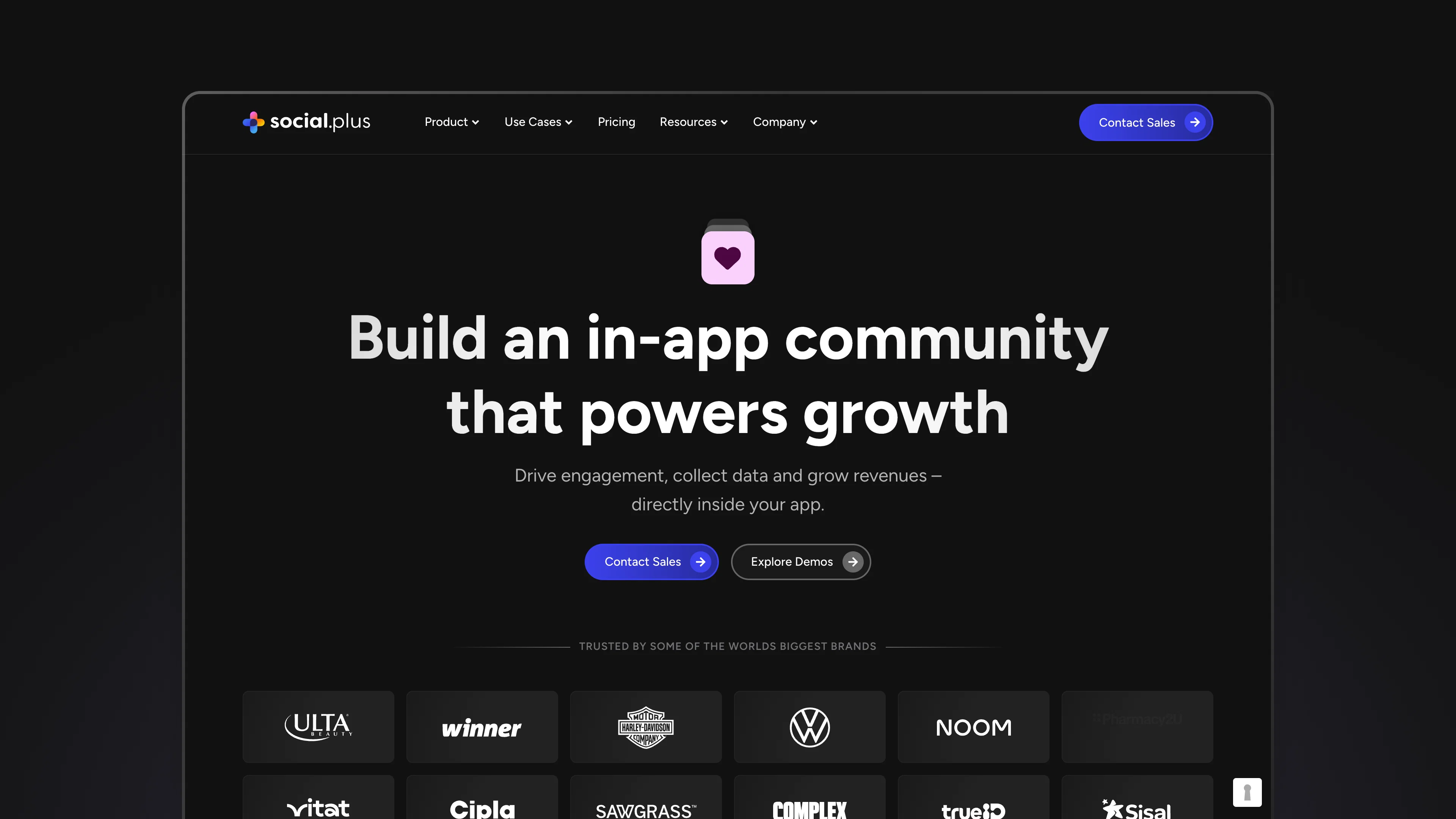
social.plus provides SDKs, APIs, and UIKit for embedding social and engagement features inside your application: chat, social feeds, stories, events, live streaming, moderation, analytics, and monetization. The SDK supports iOS, Android, Web, React Native, and Flutter with pre-built, customizable UI components across all five platforms.
What makes social.plus different from most social SDKs is that it treats engagement as a system, not a collection of features. The SDK covers the full engagement surface, from feeds and stories to live streaming, chat, and events, and connects all of it to built-in analytics that track how users engage, what content performs, and where retention patterns emerge. The platform also extends into monetization through sponsored posts and social commerce capabilities, giving teams the tools to turn their app's engagement into a revenue channel. One SDK, one integration, and the full loop from engagement to understanding to activation to revenue.
Key strengths:
- Full social engagement surface in one SDK: chat, feeds, stories, events, and live streaming that work together to create overlapping retention loops across the product
- UIKit with pre-built, customizable components across iOS, Android, Web, React Native, and Flutter, designed for fast implementation without sacrificing control over the experience
- AI-powered moderation and engagement analytics built with admins and community managers in mind, giving the people running the community direct visibility and control
- Pre-built features designed as a strategic engagement layer, where every capability from content creation to discovery to monetization reinforces the others
Considerations:
- The platform is designed for apps where engagement and retention are strategic priorities tied to business outcomes. Teams that need a single social feature without plans to measure or monetize engagement may find a focused SDK covers that one capability faster.
- The breadth of the engagement, analytics, and monetization system means there is more surface area to learn upfront. Teams benefit from starting with one engagement mechanic and expanding as they see the data from what's working.
Pricing: Contact for pricing. The platform scales with usage and scope of capabilities.
Best fit: Product and engineering teams building consumer apps who want social features that drive retention, analytics that measure the impact, and monetization that closes the loop, all in one SDK.
Stream: Best for teams that want composable social features with feed-driven engagement
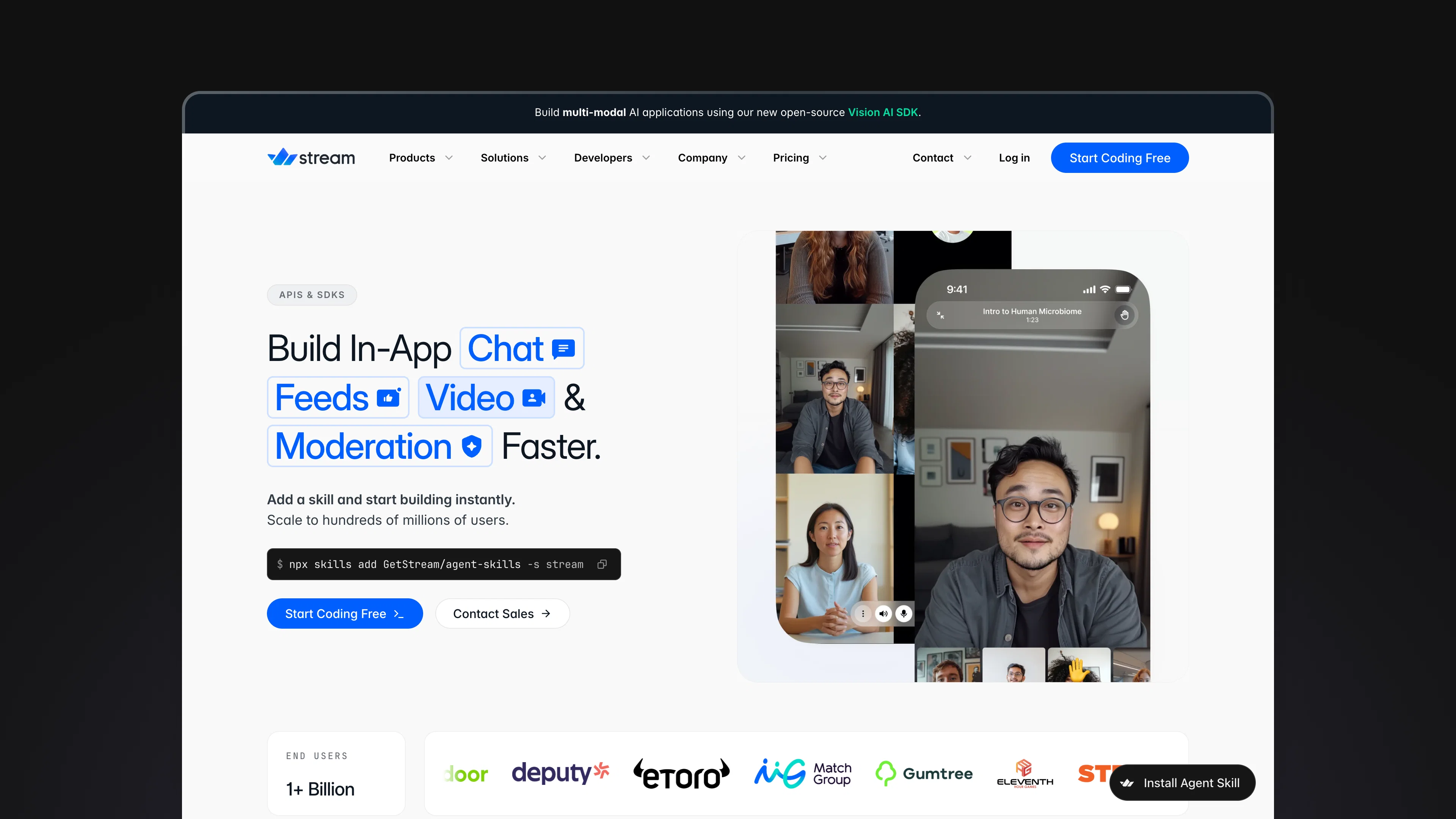
Stream provides Chat, Activity Feeds, and Video as separate SDK products, each with native SDKs and UI component libraries across major platforms. The Activity Feeds product covers a broad set of engagement capabilities including social feeds, stories, groups, community spaces, and content discovery features, giving teams a strong foundation for building feed-driven engagement experiences.
Key strengths:
- Activity Feeds SDK that covers social feeds, stories, groups, community spaces, and content discovery, providing a wide engagement surface for teams building social experiences
- Developer-centric approach with thorough documentation, per-platform tutorials, working sample apps, and an API tour that lets teams evaluate the product hands-on before committing
- Chat SDK with offline support, moderation, and message translations that support engagement across global user bases
- Dashboard with analytics and monitoring capabilities, plus webhooks that let teams pipe engagement events into their own analytics stack
Considerations:
- Each engagement mechanic (Chat, Feeds, Video) is a separate SDK with separate integration and pricing. Teams building a multi-feature engagement experience manage and pay for each product independently, which gives flexibility but adds integration surface.
- Stream's focus is on delivering strong engagement infrastructure for developers. Monetization features and the connection between engagement data and revenue outcomes are built by your team on top of Stream's products rather than included in the SDK.
Pricing: Per-product pricing. Free build tiers available. Maker Account for early-stage teams. Enterprise is custom.
Best fit: Engineering teams that want composable, well-documented SDKs for social engagement features and prefer a developer-centric platform where they control how engagement connects to business outcomes.
Sendbird: Best for apps where chat is the primary engagement and retention mechanic
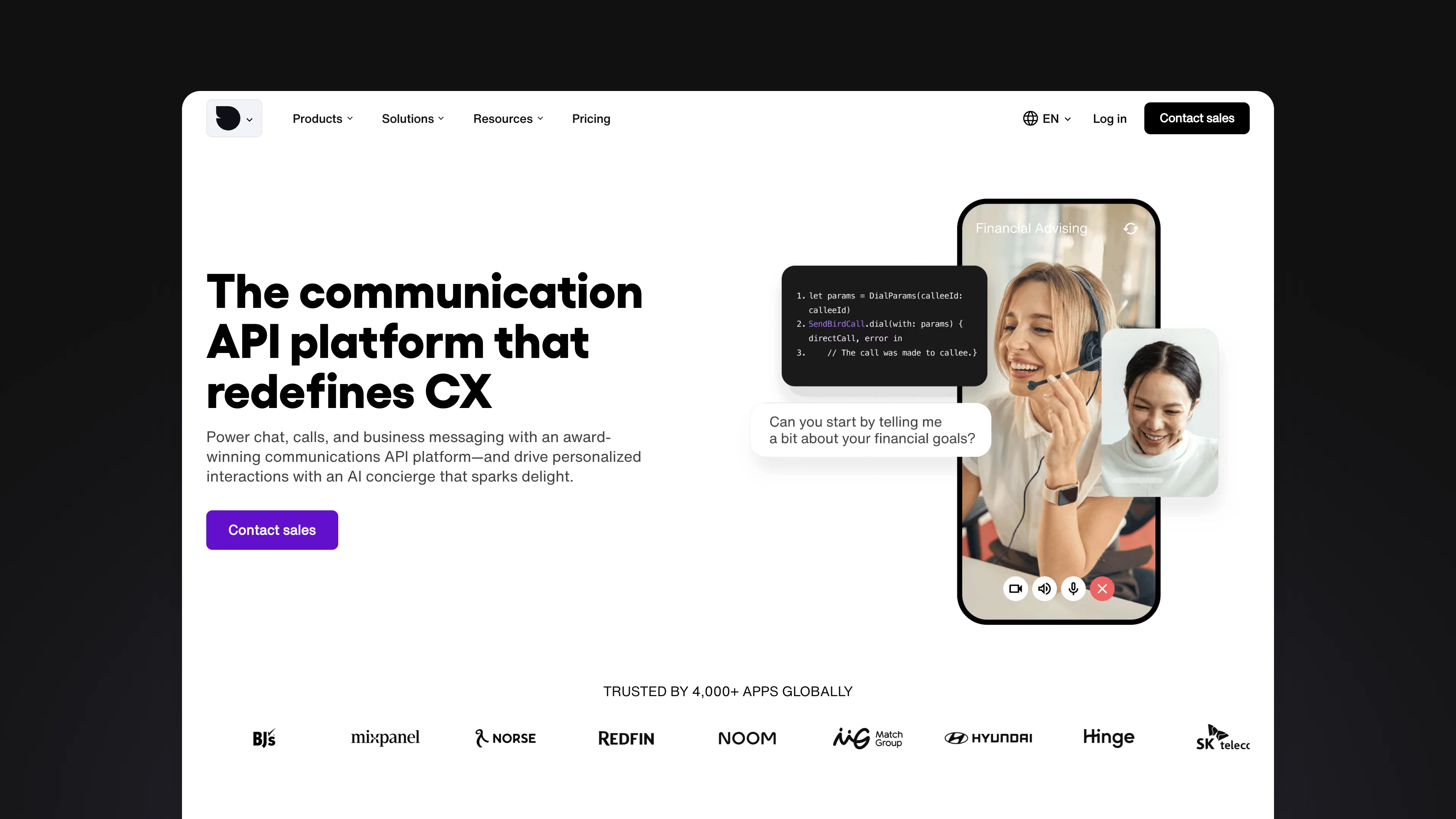
Sendbird provides Chat, Voice, Video, and Live Streaming SDKs with native support across iOS, Android, Web, React Native, Flutter, and Unity. UIKit components are available for React, SwiftUI, and Jetpack Compose. The platform includes an AI layer for conversational engagement and customer experience automation.
Key strengths:
- Chat SDK built for engagement at scale with supergroup channels supporting up to 20,000 concurrent users
- AI-powered conversational experiences that automate engagement patterns and customer journeys
- UIKit components for React, SwiftUI, and Jetpack Compose
- SOC 2, HIPAA, ISO 27001, and GDPR compliance for engagement features in regulated environments
Considerations:
- Sendbird's engagement strength is centered on conversation: chat, voice, video, and live streaming. Social feeds, content discovery, stories, and broader engagement mechanics beyond messaging are outside the SDK's scope. Teams building engagement across multiple social surfaces build those layers separately.
- The platform's roadmap is increasingly focused on AI-driven conversational engagement and customer experience automation. Teams whose engagement strategy centers on content, community, and social mechanics rather than conversational CX should evaluate whether the direction aligns.
Pricing: Tiered plans from Starter through Enterprise. Enterprise is custom.
Best fit: Teams building apps where real-time conversation is the primary engagement mechanic and where AI-driven conversational experiences are a priority.
Agora: Best for apps where real-time voice and video drive user engagement

Agora provides Voice Calling, Video Calling, Live Streaming, Broadcast Streaming, Chat, and Signaling SDKs with native support across iOS, Android, Web, React Native, Flutter, and Unity. The platform includes AI extensions for audio and video quality optimization and a dedicated analytics product for monitoring engagement quality.
Key strengths:
- Low-latency global infrastructure designed for real-time engagement experiences across voice, video, and live streaming
- Agora Analytics: dedicated product for real-time monitoring, quality-of-experience metrics, and engagement diagnostics
- AI extensions including noise suppression, real-time speech-to-text, and adaptive video optimization that improve session quality and engagement duration
- Broad SDK coverage including cross-platform and Unity for diverse app types
Considerations:
- Agora's engagement strength is real-time communication quality. Social feeds, content creation tools, user profiles, and content-based engagement mechanics are outside the SDK's scope. Teams building engagement experiences that extend beyond voice and video build those layers separately.
- Engagement measurement through Agora Analytics focuses on session quality and delivery metrics rather than user-level retention KPIs or content engagement analytics. Teams needing business-outcome analytics connect Agora's data to their own analytics stack.
Pricing: Per-product, usage-based pricing. Free minutes included for voice and video. Enterprise is custom.
Best fit: Teams building apps where live audio, video, or streaming is the primary engagement surface and where session quality directly determines whether users come back.
PubNub: Best for teams that want to build custom engagement systems on real-time infrastructure
PubNub provides real-time infrastructure SDKs built on a publish/subscribe model, covering messaging, presence detection, serverless Functions, and file sharing. The platform also includes Illuminate, a dedicated analytics and decisioning product that adds a no-code layer for teams to build automated engagement and retention workflows on top of PubNub's real-time data.
Key strengths:
- Real-time infrastructure with sub-100ms global latency and a 99.999% uptime SLA, giving teams a reliable foundation for engagement features where responsiveness directly affects whether users stay or leave
- Built-in presence detection that tracks user activity in real time, enabling engagement triggers like "user is online" indicators and live participation signals that make the app feel alive
- Illuminate adds a no-code analytics and decisioning layer on top of the infrastructure, letting teams build automated retention workflows and respond to engagement patterns without additional engineering
- Serverless Functions that run custom engagement logic at the edge, so teams can build personalized responses to user behavior without managing their own backend
Considerations:
- PubNub provides the real-time infrastructure and analytics layer, not the social features themselves. Feeds, profiles, content creation, stories, and engagement UIs are all built by your team on top of PubNub's platform. This gives maximum control over the engagement experience but requires significant engineering investment to create it.
- PubNub is most relevant when your engagement needs extend beyond social features into areas like IoT, gaming, live events, or data streaming, where the same real-time infrastructure and decisioning layer serves multiple use cases.
Pricing: Free tier available. Tiered pricing based on MAU. Enterprise is custom.
Best fit: Engineering teams that want full architectural control over the engagement experience, with real-time infrastructure and an analytics layer that automates retention actions on top of their custom-built social features.
At-a-Glance Comparison
How to Choose the Right Social SDK for Engagement & Retention
With five SDKs covering different parts of the engagement stack, the decision comes down to five things.
What engagement mechanics your app needs. If retention hinges on one mechanic like chat or live video, a focused SDK ships that fast. If your engagement strategy spans feeds, stories, events, and live streaming, a full-stack SDK means building once instead of integrating multiple products from different vendors.
Whether you need to measure engagement outcomes. Shipping social features is step one. Knowing what those features do for retention, engagement rates, and user behavior is step two. Some SDKs include analytics that give your product and growth teams direct visibility into what's working. Others provide the features and leave measurement to your team. If engagement data is core to how your team makes decisions, evaluate whether the SDK provides it or whether you're building that layer yourself.
Whether engagement connects to revenue. For apps where community drives the business, the path from engagement to monetization matters. Native advertising in feeds, social commerce through product tagging, and other monetization mechanics built into the SDK mean your team ships revenue features alongside engagement features, using the same integration. If monetization is a separate project on a separate timeline, a feature-focused SDK works. If engagement and revenue are part of the same strategy, look for SDKs that treat them as one system.
How many platforms you're shipping on. Engagement features need to work everywhere your users are. Native SDKs and UI components across iOS, Android, Web, React Native, and Flutter mean your team ships engagement faster on every surface. Verify that the SDK's pre-built components cover every platform you're targeting.
How moderation scales with engagement. More engagement means more content. More content means more moderation. AI-powered moderation, automated content filtering, and admin workflows should scale alongside the social features, not trail behind them. Evaluate whether moderation is built into the SDK or something your team adds separately.
The best social SDK for engagement and retention is the one that goes beyond feature delivery into measurement, action, and monetization, so your team can see what's working and scale what matters.