5 Best Alternatives to Discord and Facebook Groups for Brands (2026)
Discord and Facebook Groups are where a lot of brand communities start. They're free, users already have accounts, and a community can be up and running the same day. But brands that grow on these platforms eventually run into the same problem: the community lives on someone else's platform, not inside the product. The engagement data belongs to Discord or Meta, not the brand. The user experience is shaped by someone else's design decisions, someone else's algorithm, and someone else's monetization model. Users build habits around Discord or Facebook, not around the brand's own product. For brands that want community to be a growth lever, that value leakage adds up. The engagement, the relationships, and the behavioral data that should be strengthening the product are strengthening someone else's platform instead.
What Brands Run Into on Discord and Facebook Groups
Discord and Facebook Groups work well for getting a community started, but the trade-offs become clear as the community and the brand grow.
The data stays with the platform. Engagement data, user behavior, content interactions, and community growth metrics belong to the platform, not the brand. You can't feed community engagement data into your own analytics, personalize the product based on community behavior, or build audience segments from how users interact in the community. The insights that should inform product decisions stay locked in someone else's system.
The relationship builds around the platform. Users build habits around Discord or Facebook, not around the brand. Understanding the difference between owned communities vs. social platforms is key's product. When they want to engage with the community, they open Discord or Facebook, not the brand's app. That means the brand is driving engagement to a platform it doesn't control, undermining the brand community, training users to associate the community with a third party rather than with the product itself.
The experience is shaped by the platform. The design, the UX, the content ranking, and the engagement patterns are all decided by the platform. On Discord, your brand community looks like every other server. On Facebook, your group competes with a news feed designed to keep users on Facebook, not in your group. Brand identity is constrained to what the platform allows: a logo, a banner, and whatever customization options they decide to offer.
The rules are set by the platform. Platform policy changes, algorithm updates, and moderation decisions happen on the platform's timeline, not yours. Brands have seen communities disrupted by policy shifts they had no voice in. Building on a platform you don't control means accepting that the rules can change without warning.
These are the trade-offs that push brands to explore alternatives and ask where community should live: ownership of data, ownership of the user relationship, control over the experience, and control over the rules.
Two Approaches: Branded Community Platforms vs. In-App Community Infrastructure
Before evaluating specific options, it helps to understand the two categories of alternatives, because the choice between them matters more than the choice between individual products.
Branded community platforms are hosted services where brands create their own community space with their own branding, domain, and design, functioning as white-label community platforms. Members sign up for the community, access it through the platform's web app or mobile app, and engage in a space that carries the brand's identity rather than Discord's or Facebook's. The community is still hosted by a third party, but the brand controls the experience, the branding, and in most cases the data. Examples include Circle and Mighty Networks. This approach works well for creator businesses, membership communities, and brands whose community is the product.
In-app community infrastructure provides SDKs, APIs, and pre-built UI components that brands embed directly inside their own application. The community features become part of the product itself. Users don't leave the app to engage with the community. The data flows into the brand's own systems. The experience is designed by the brand's team and styled to match the product. Examples include social.plus, Stream, and Sendbird. This approach works well for product-led brands, apps with existing user bases, and teams that want community engagement to happen inside the product rather than alongside it.
Neither approach is universally better. The right fit depends on whether the brand needs a standalone community app or an embedded layer. The right choice depends on whether the brand's community is the product itself or a layer inside an existing product.
5 Best Alternatives to Discord and Facebook Groups for Brands (2026)
social.plus: Best for brands that want a full community layer they own inside their own app
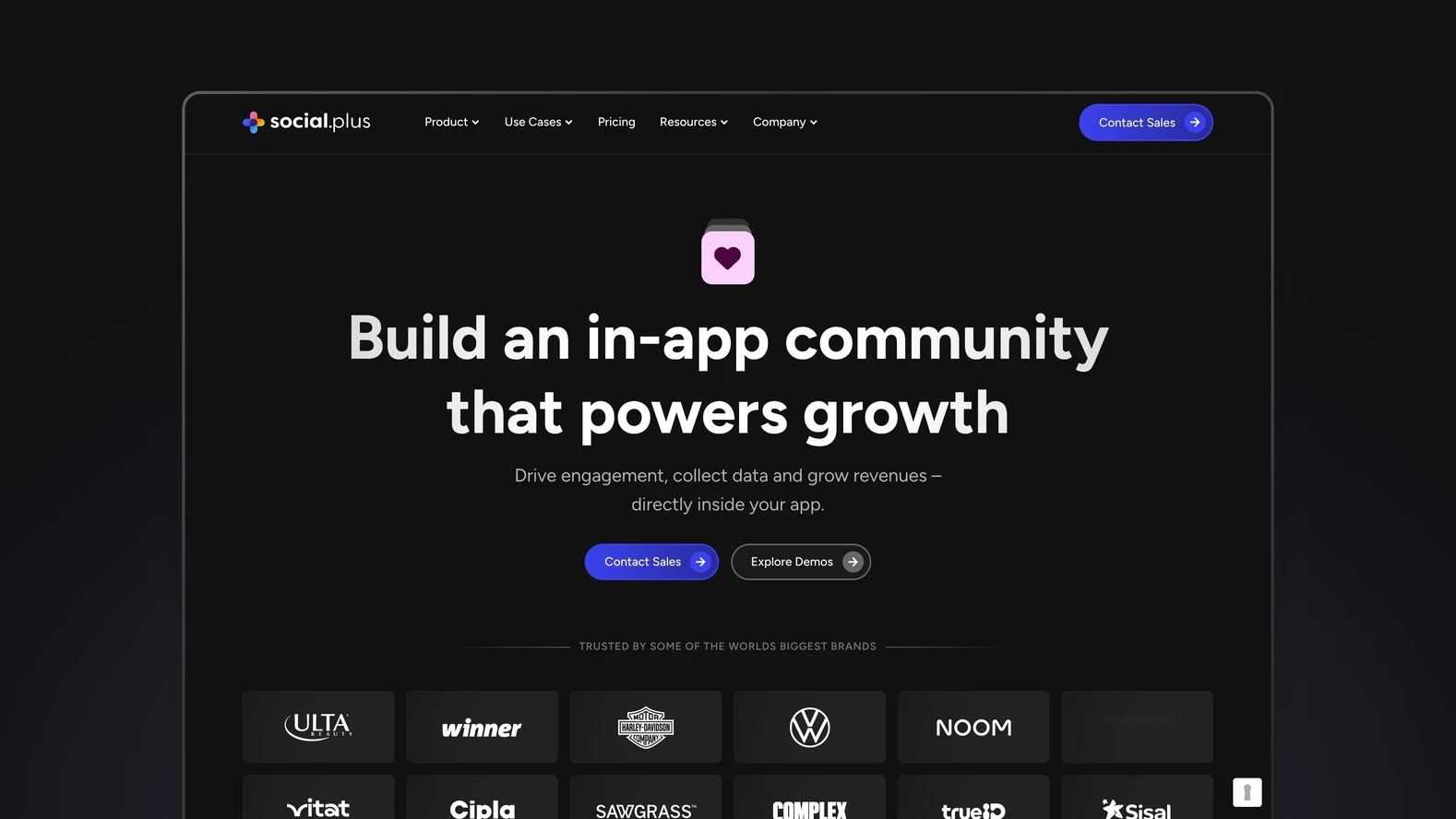
social.plus provides SDKs, APIs, and UIKit for embedding community features directly inside your application: chat, social feeds, stories, events, live streaming, moderation, analytics, and monetization. The platform supports iOS, Android, Web, React Native, and Flutter with pre-built, customizable UI components across all five platforms. SOC 2, GDPR, and ISO 27001 compliant.
For brands moving off Discord or Facebook Groups, social.plus solves the core ownership problem. Community engagement happens inside the brand's own product, not on a third-party platform. Users don't leave the app to participate. Engagement data stays in the brand's ecosystem. Social feeds give users content to return to between sessions, stories create daily touch points, events bring the community together at scheduled moments, live streaming supports real-time interaction, and chat handles the direct conversations that build relationships. AI-powered moderation, analytics, and monetization through sponsored posts and social commerce with product tagging give brands the operational and revenue layer on top of the engagement, all from one SDK.
Key strengths:
- Community features embedded inside the brand's own app through SDKs and UIKit, so users engage with the brand's product rather than opening a separate platform, and engagement data stays in the brand's ecosystem
- Social feeds, stories, events, live streaming, and chat from one integration, replacing the fragmented experience of Discord channels and Facebook Group posts with a cohesive community layer designed by the brand's team
- AI-powered moderation that the brand controls directly, with rules and content filtering configured to match the brand's standards rather than relying on a third-party platform's moderation policies
- Monetization through sponsored posts and social commerce with product tagging, turning community engagement into a revenue channel that flows through the brand's product rather than enriching an external platform
Considerations:
- In-app community infrastructure requires engineering integration. Brands without a development team or an existing app may find a hosted community platform faster to launch.
- social.plus is designed for brands that have an application they want to embed community into. Brands whose community is the product itself, rather than a feature inside a product, may find a standalone community platform a more natural fit.
Pricing: Contact for pricing. Plans scale with usage and scope.
Best fit: Product-led brands with an existing app who want to move community engagement from external platforms like Discord and Facebook Groups into their own product, with full ownership of the experience and data.
Circle: Best for brands that want a standalone branded community they control without building from scratch

Circle is a hosted community platform where brands create their own branded space with discussions, chat, events, courses, live streaming, and member management. The platform offers web access plus iOS and Android apps. Plans start at $89/month (Professional) with Business at $199/month and custom Circle Plus pricing. SOC 2 Type 2 audited. GDPR compliant with data processing agreements available.
Key strengths:
- A full community platform with discussions, chat, events, courses, live streaming, and member management that brands can launch without engineering resources, replacing Discord servers and Facebook Groups with a space the brand owns and controls
- Custom branding with your own domain, colors, and design, so the community carries the brand's identity rather than Discord's or Facebook's visual framework. Circle Plus adds fully branded iOS and Android apps published under the brand's name
- Built-in monetization through memberships, courses, and gated content with Stripe integration, giving brands a direct revenue channel from the community
- Headless API on Business plans and above that lets brands with development resources integrate community features into their own website or app for a more embedded experience
Considerations:
- The community lives on Circle's hosted platform. Members access it through Circle's web app or the Circle mobile app (or a branded app on Circle Plus). For brands that want community to be part of an existing product experience rather than a separate destination, this is an additional step users navigate to.
- Transaction fees apply on top of Stripe processing: 2% on Professional, 1% on Business, 0.5% on Circle Plus. Brands with high transaction volume should factor this into the cost comparison.
Pricing: Professional at $89/month, Business at $199/month, Circle Plus at custom pricing. All billed annually. 14-day free trial.
Best fit: Creator businesses, membership brands, and companies that want a branded community space they control without building from scratch, especially when courses, events, and paid memberships are part of the community model.
Mighty Networks: Best for brands that want their community to feel like a native app with built-in courses and memberships

Mighty Networks is a hosted community platform that combines community spaces, courses, events, and memberships into a single branded experience. The platform offers web access plus native iOS and Android apps, with fully branded app publishing available on higher tiers. GDPR and CCPA compliant.
Key strengths:
- Native iOS and Android apps (not web wrappers) that put the brand's community on members' home screens, creating a mobile-first experience that competes directly with the habit of opening Discord or Facebook
- Courses, events, and memberships built into the community platform, so brands don't need separate tools for education, scheduling, and paid access alongside the community
- Community spaces that organize conversations by topic, interest, or membership tier, giving brands more structure than Discord's channel-based layout or Facebook Groups' single-feed format
- Branded app publishing on Growth and Mighty Pro tiers that puts the community in the App Store and Google Play under the brand's name
Considerations:
- Like Circle, the community lives on Mighty Networks' hosted platform. Members engage through Mighty's apps or web experience. For brands that want community embedded inside an existing product, this is a separate destination rather than an integrated feature.
- API access is limited to the Scale tier and above. Brands that need deep integrations with their existing tech stack should evaluate whether the available API coverage meets their requirements.
Pricing: Launch at $79/month, Scale at $215/month, Mighty Pro at custom pricing. Billed annually. Transaction fees apply (2% on Launch).
Best fit: Creator brands, coaches, and membership businesses that want their community to feel like a standalone branded app, especially when courses, events, and paid memberships are core to the community experience.
Stream: Best for brands that want to embed feeds and chat inside their product with per-feature flexibility
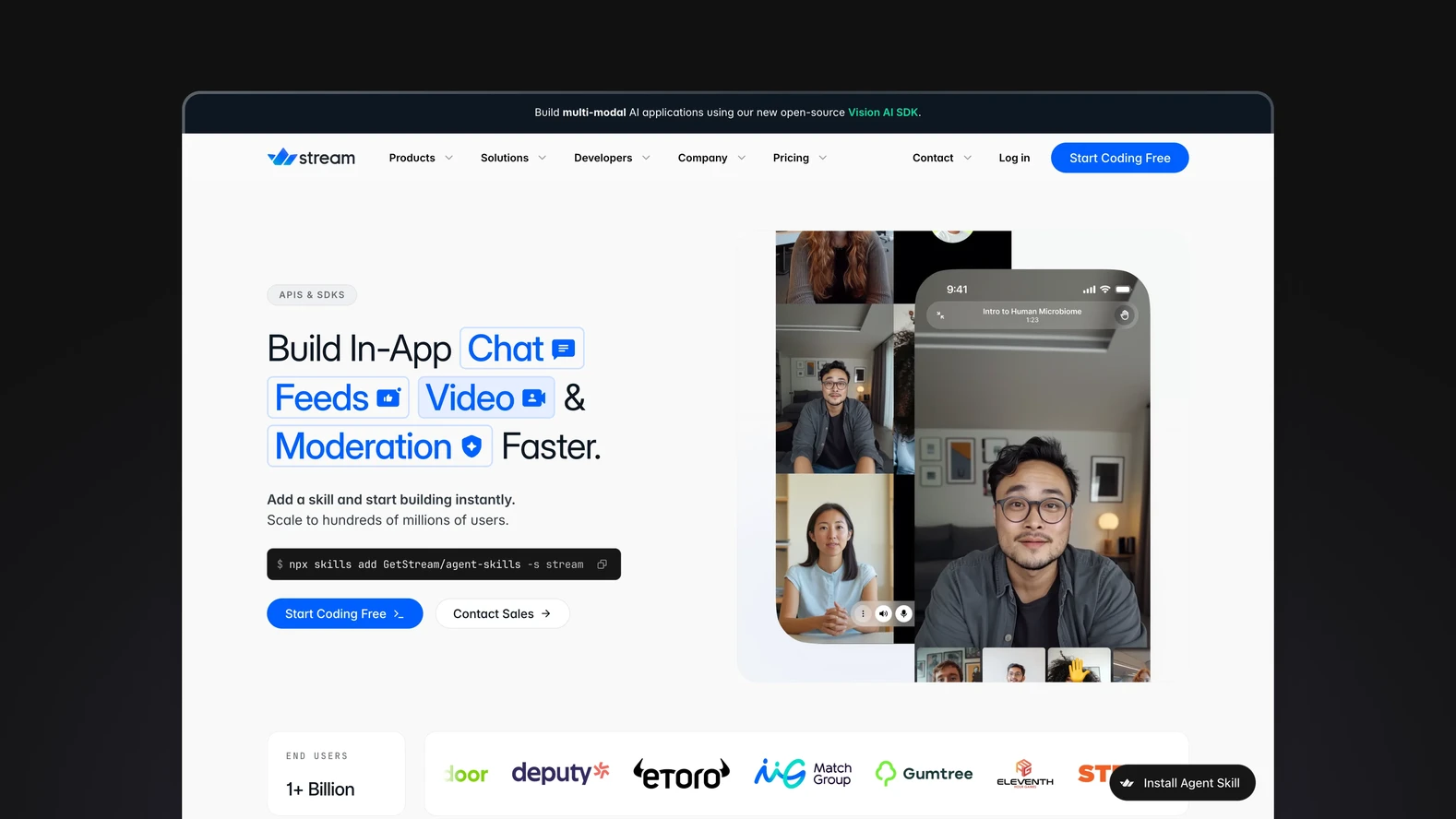
Stream provides Chat and Activity Feeds as separate SDK products, each with native SDKs and UI component libraries across major platforms. The Activity Feeds product covers social feeds, stories, groups, community spaces, and content discovery. SOC 2, ISO 27001, HIPAA, and GDPR compliant.
Key strengths:
- Activity Feeds and Chat SDKs that embed directly inside the brand's own application, so community engagement happens in the product rather than on Discord or Facebook
- Separate adoption model that lets brands start with feeds for content and community, add chat for direct conversation later, or use both from day one depending on what the community needs
- UI component libraries with theming support that let brands style the community experience to match their product's design system, replacing Discord's generic server look with a brand-native interface
- AI Moderation as a dedicated product, giving brands direct control over content governance rather than relying on Discord's or Facebook's moderation systems
Considerations:
- Chat and Activity Feeds are separate SDKs with separate integration and pricing. Brands using both manage two products independently, which adds integration surface compared to getting both from a single SDK.
- Stream covers feeds and chat. Live streaming, events, monetization, and broader community features beyond content and conversation are built by the brand's team on top of Stream's products.
Pricing: Per-product pricing. Free build tiers available. Enterprise is custom.
Best fit: Engineering teams at product-led brands who want to replace Discord or Facebook Groups by embedding feeds and chat directly inside their app, with the flexibility to adopt each feature independently.
Sendbird: Best for brands where the community experience centers on messaging and real-time conversation
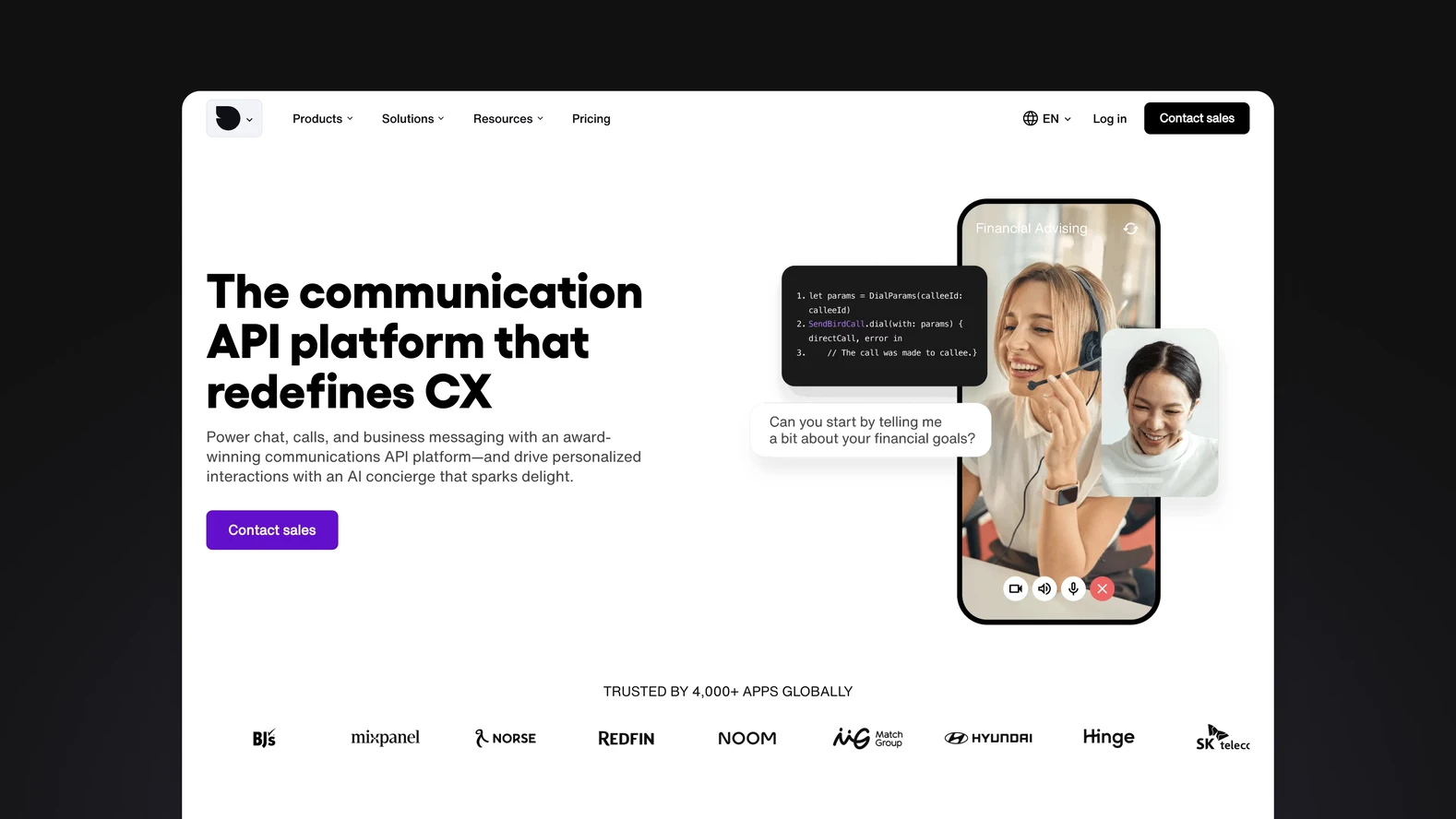
Sendbird provides Chat, Voice, Video, and Live Streaming SDKs with native support across iOS, Android, Web, React Native, Flutter, and Unity. UIKit components are available for React, SwiftUI, and Jetpack Compose. SOC 2, HIPAA, ISO 27001, and GDPR compliant.
Key strengths:
- Chat SDK that embeds directly inside the brand's app, replacing the experience of messaging in Discord servers or Facebook Group comment threads with a branded, in-app conversation layer the brand owns
- Supergroup channels supporting up to 20,000 concurrent users, giving brands the infrastructure for large community conversations, AMAs, and live event chat that Discord caps at lower limits for non-boosted servers
- Voice and video SDKs for live community sessions, coaching calls, and events that happen inside the brand's product rather than through Discord's voice channels
- AI-powered conversational automation that brands can use for community onboarding, engagement prompts, and support workflows within the messaging experience
Considerations:
- Sendbird specializes in messaging and real-time communication. Social feeds, content discovery, stories, and broader community features beyond conversation are outside the platform's scope. Brands that want a content-driven community alongside messaging build the feed layer separately.
- UIKit components are available for React, SwiftUI, and Jetpack Compose. Brands on other frameworks use the APIs to build custom chat UI.
Pricing: Tiered plans through Enterprise. Enterprise includes custom pricing and dedicated support.
Best fit: Brands whose Discord or Facebook Group community is primarily conversational, and who want to own that conversation inside their own app with enterprise-grade messaging infrastructure.
At-a-Glance Comparison
How to Choose the Right Alternative for Your Brand
With five options spanning two categories, the decision starts with one fundamental question and then narrows from there.
Is the community your product, or a feature inside your product? If the community is the product, a hosted community platform like Circle or Mighty Networks gets you there faster. You get a branded space with discussions, events, courses, and monetization without building from scratch. If the community is a feature inside an existing app, in-app infrastructure like social.plus, Stream, or Sendbird embeds the experience directly into your product so users never leave.
How much of the experience do you want to own? Hosted platforms give you control over branding, content, and member management, but the infrastructure, UX patterns, and platform policies are still managed by the host. In-app infrastructure gives you full control over everything: the design, the data, the rules, and how the community integrates with the rest of the product.
What kind of community engagement matters most? If the community is content-driven with discussions, courses, and events at the center, evaluate platforms with strong content and scheduling features. If the community is conversation-driven with messaging, group chat, and real-time interaction at the center, evaluate platforms with deep chat capabilities. If it spans both, evaluate platforms that cover content and conversation from one integration.
What are your technical resources? Hosted platforms require no engineering. In-app infrastructure requires development resources but delivers a product-integrated result. Some options offer both paths: Circle's Headless API and Mighty's branded apps bridge the gap for brands that want ownership without building everything from scratch.
The best alternative to Discord and Facebook Groups is the one that moves community engagement from a platform you don't control to an experience you own, whether that means a branded destination or a feature embedded directly inside your product.