
5 Best In-App Community Platforms for Retail & E-Commerce Apps (2026)
Retail apps that grow repeat purchases have figured out something that product catalogs alone can't deliver: community makes shopping social. When buyers share hauls, review products in their own words, watch live shopping events, and follow other shoppers whose taste they trust, the app becomes a destination rather than a checkout flow. Social proof from real users drives conversions more effectively than marketing copy, and the engagement that community creates between purchases keeps the app installed and opened. Building those community features from scratch pulls engineering resources away from the commerce experience itself. In-app community platforms give retail teams the SDKs, APIs, and UI components to add social features to the shopping experience without rebuilding their core product. The difference between platforms is how much of the social commerce experience they cover and where each goes deepest. This guide compares five platforms, what each offers for retail and e-commerce apps, and how to choose.
Why Community Matters for Retail & E-Commerce Apps
Shopping is increasingly social, and the retail apps that lean into this are the ones building repeat engagement. Buyers who participate in a community around a brand or marketplace buy more often, return fewer items, and are more likely to recommend the app to others. The community creates a reason to open the app that has nothing to do with needing to buy something, which is exactly what drives the repeat visits that turn into repeat purchases, the core value of in-app community.
The community features that matter for retail and e-commerce fall into distinct categories. Content features like social feeds and stories turn buyers into contributors: product reviews, outfit-of-the-day posts, unboxing videos, and curated collections create a social discovery layer that helps shoppers find products through people they trust rather than algorithms alone. Live shopping through streaming brings the energy of in-person retail into the app, with hosts demonstrating products, answering questions, and creating urgency that drives impulse purchases. Chat connects buyers with sellers, stylists, support teams, and each other, making the app the place where purchase decisions happen. Moderation keeps the community trustworthy by filtering spam, fake reviews, and inappropriate content that erodes buyer confidence.
The platforms in this guide, many of which also serve as community platforms for fitness apps, all provide SDKs and APIs for embedding these features inside a retail or e-commerce app. Where they differ is in how many of those features they cover, whether the platform supports the social commerce mechanics that retail apps depend on, and how far it extends into the analytics and monetization that drive revenue. Several of these platforms also serve gaming and betting apps.
What to Look for in a Community Platform for Retail & E-Commerce Apps
Before evaluating specific platforms, it helps to know what separates one from another when retail and e-commerce is the use case. These are the criteria that matter most.
Social commerce capabilities. The most valuable community platforms for retail don't just add social features alongside the shopping experience. They connect the two. Product tagging in posts and livestreams, shoppable content, and community-driven discovery that leads directly to purchase are the features that turn engagement into revenue. Evaluate whether the platform supports commerce-aware social features or whether your team builds those connections.
Content and discovery features. Buyer-generated content is the engine of social commerce: reviews, outfit posts, product photos, and curated collections drive discovery and trust. Evaluate whether the platform supports social feeds, stories, reactions, and content creation tools that make it easy for your buyers to contribute and for other shoppers to discover products through community content.
Live shopping and streaming. Live commerce is one of the fastest-growing engagement channels in retail. Hosts showcase products, viewers ask questions and react in real time, and purchase intent peaks during the broadcast. Evaluate whether the platform supports live streaming with the interactive features that make live shopping effective: real-time chat, reactions, and the ability to connect product display with purchasing.
Chat for buyer-seller and support conversations. In marketplace and retail apps, chat is where purchase decisions happen: questions about sizing, availability, shipping, and product details. Evaluate chat features for buyer-seller messaging, group conversations around product categories, and whether the SDK supports the conversational commerce patterns your app needs.
Moderation for buyer trust. Community content in retail directly affects purchase decisions. Fake reviews, spam, and misleading product claims erode the trust that drives conversions. Evaluate whether the platform provides AI-powered moderation and content filtering that keep community content credible.
Monetization integration. For retail apps, community should drive revenue, not just engagement. Sponsored product placements in feeds, social commerce with product tagging, and promoted content are the mechanics that connect community engagement to the commerce funnel. Evaluate whether the platform supports these natively.
The right platform depends on how social commerce fits into your retail product, whether live shopping is part of the strategy, and how far the platform extends beyond basic community features into the commercial mechanics that drive purchases.
5 Best In-App Community Platforms for Retail & E-Commerce Apps (2026)
social.plus: Best for retail apps that want social commerce and community-driven product discovery from one platform
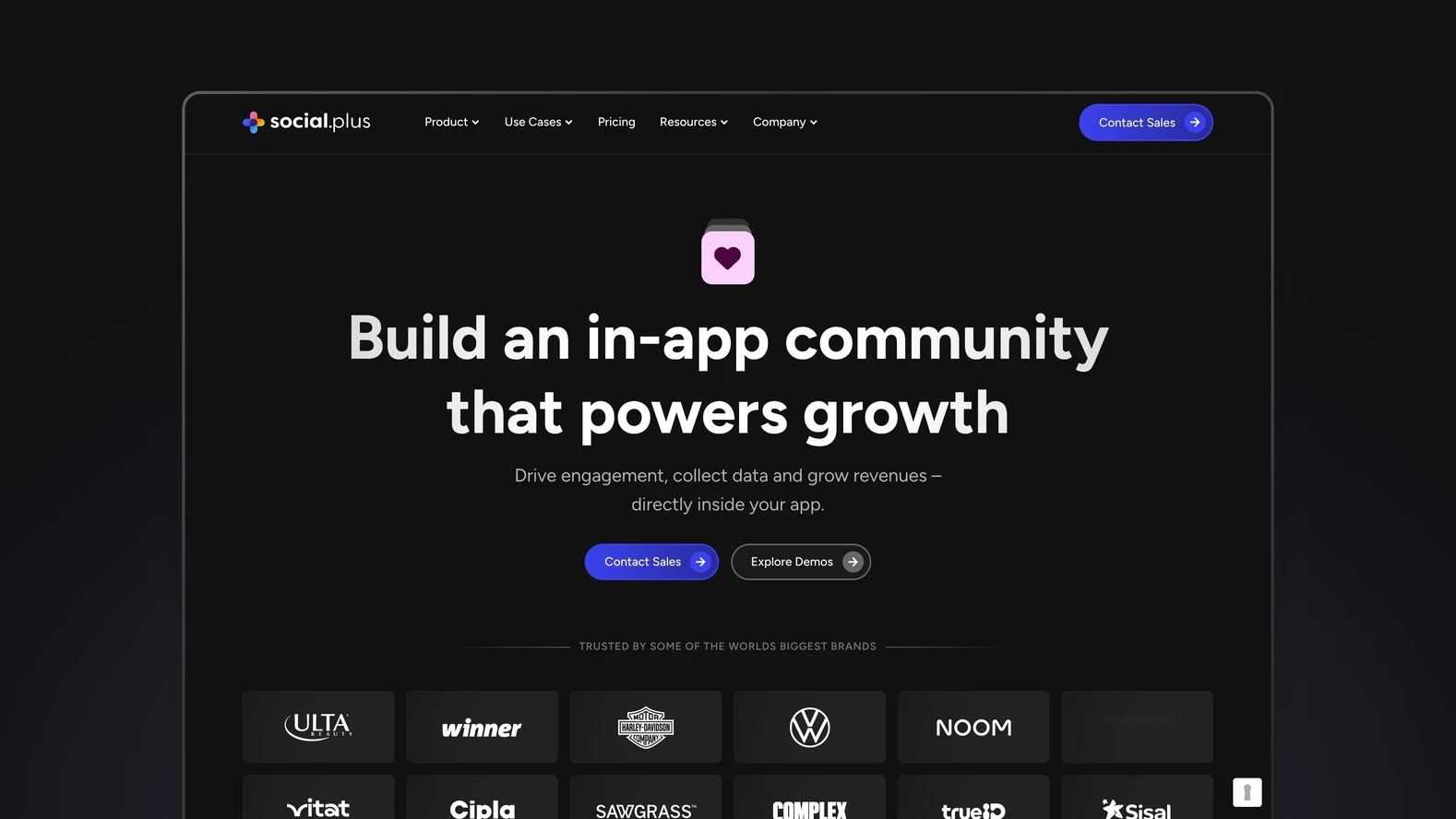
social.plus provides SDKs, APIs, and UIKit for embedding community features inside retail and e-commerce applications: chat, social feeds, stories, events, live streaming, moderation, analytics, and monetization. The platform supports iOS, Android, Web, React Native, and Flutter with pre-built, customizable UI components across all five platforms. SOC 2, GDPR, and ISO 27001 compliant.
For retail apps, the platform connects community engagement directly to commerce. Content through feeds and stories turns buyers into contributors who share reviews, product photos, and curated collections that other shoppers browse for discovery. Live streaming powers live shopping events where hosts showcase products and viewers engage in real time. Monetization through sponsored posts and social commerce with product tagging across posts and livestreams connects the social experience directly to the purchase funnel, all from one SDK.
Key strengths:
- Social feeds for product reviews and buyer collections, stories for new arrivals and daily picks, events for product launches and flash sales, live streaming for live shopping sessions, and chat for buyer-seller conversations, all from one SDK so retail teams ship the full social shopping experience without stitching vendors
- Social commerce with product tagging across posts and livestreams, so buyers go from seeing a product in community content to purchasing it without leaving the social experience
- AI-powered moderation that filters spam, fake reviews, and misleading product claims at scale, keeping buyer-generated content trustworthy as the community grows
- UIKit with pre-built components across iOS, Android, Web, React Native, and Flutter that teams can restyle to match the retail app's brand and shopping experience
Considerations:
- The platform covers the full community and social commerce stack. Retail apps that only need buyer-seller chat and nothing else may find a messaging-focused SDK covers that one need faster.
- Social commerce features like product tagging work within the social.plus community layer. Connecting tagged products to your app's checkout and inventory systems requires integration work on your team's side.
Pricing: Contact for pricing. Plans scale with usage and scope.
Best fit: Retail and e-commerce product teams who want community features that drive both engagement and revenue, from buyer-generated content and live shopping to social commerce, from one platform.
Stream: Best for teams that want separate Chat and Activity Feeds SDKs they can adopt per product need
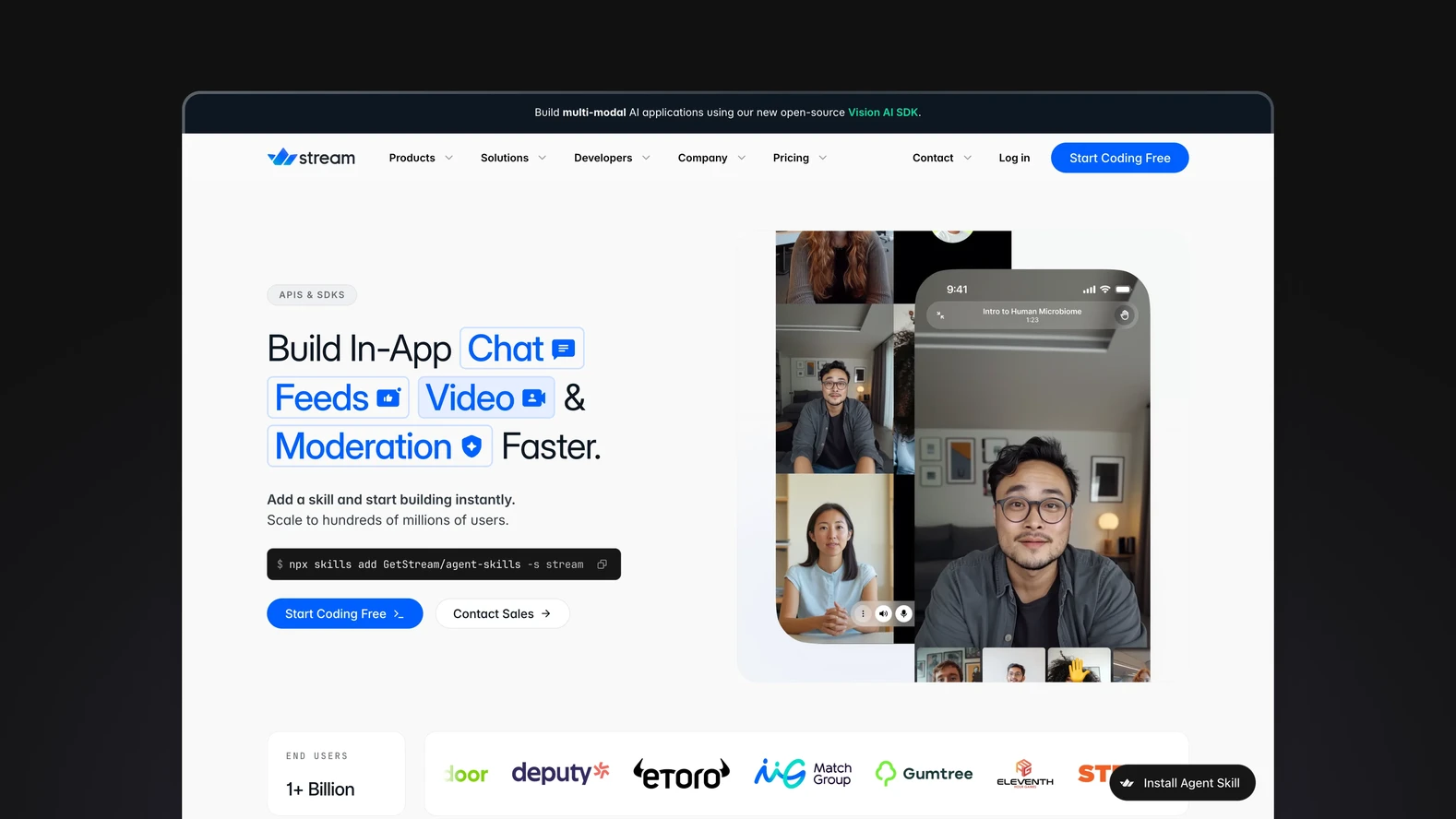
Stream provides Chat and Activity Feeds as separate SDK products, each with native SDKs and UI component libraries across major platforms. The Activity Feeds product covers social feeds, stories, groups, community spaces, and content discovery. SOC 2, ISO 27001, HIPAA, and GDPR compliant.
Key strengths:
- Activity Feeds SDK with social feeds, stories, groups, and content discovery that retail teams can use for product reviews, buyer content, and community-driven browsing
- Chat SDK for buyer-seller conversations and customer support messaging as a separate product that teams adopt alongside or independently from feeds
- Separate adoption model that lets teams start with one product and add the other later without switching vendors, useful when the product roadmap phases content and messaging separately
- Developer-focused documentation and tooling that support engineering teams through evaluation and integration
Considerations:
- Chat and Activity Feeds are separate SDKs with separate integration and pricing. Retail teams using both manage two products independently, which adds integration surface compared to getting both from a single SDK.
- Stream covers feeds and chat. Live streaming for live shopping events, social commerce features like product tagging, events for product launches, and monetization are built by your team on top of Stream's products.
Pricing: Per-product pricing. Free build tiers available. Enterprise is custom.
Best fit: Engineering teams that want the flexibility to adopt feeds and chat independently, choosing one or both based on what the retail product needs today.
Sendbird: Best for retail apps where conversational commerce and buyer-seller messaging drive purchases
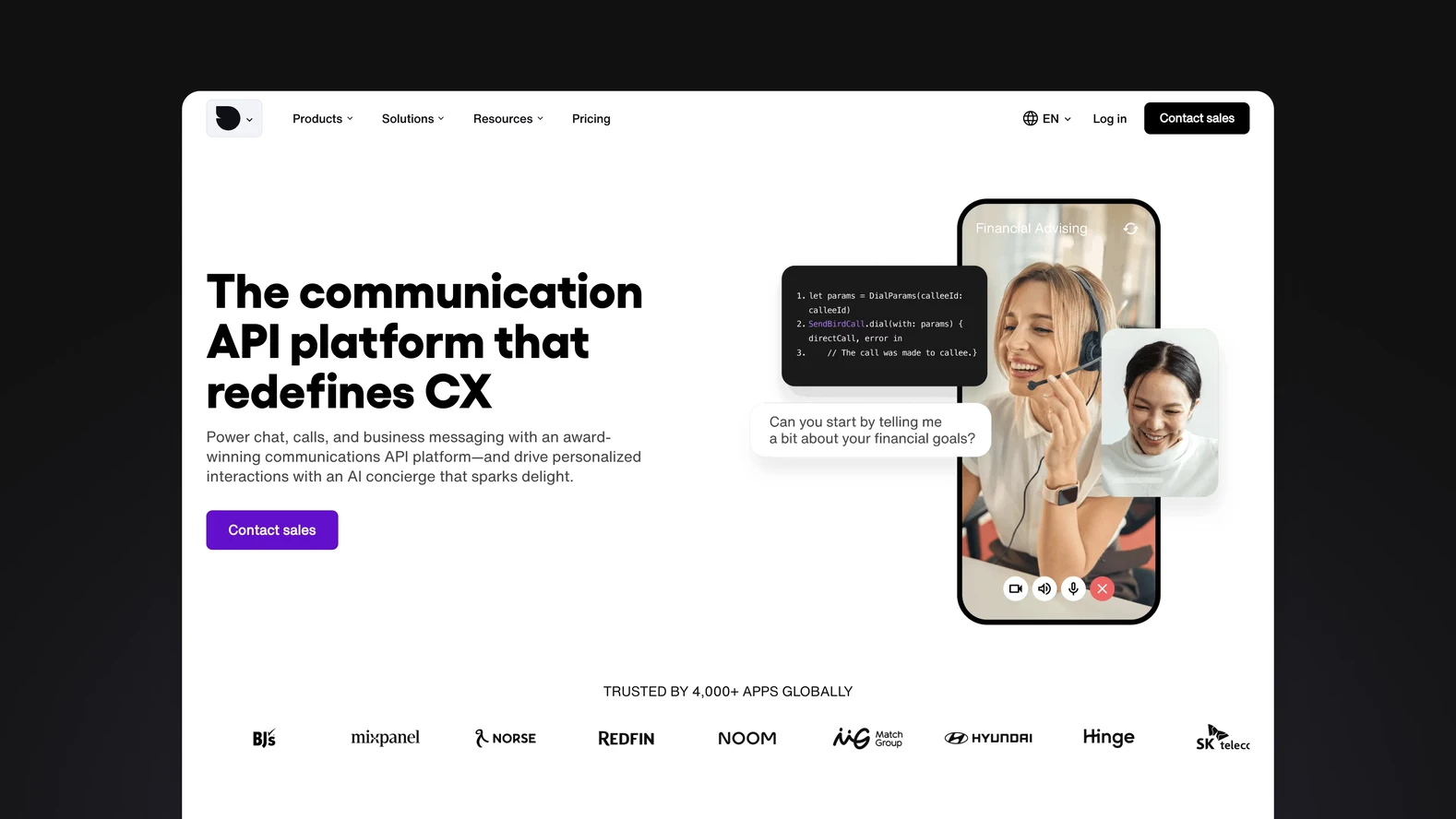
Sendbird provides Chat, Voice, Video, and Live Streaming SDKs with native support across iOS, Android, Web, React Native, Flutter, and Unity. UIKit components are available for React, SwiftUI, and Jetpack Compose. SOC 2, HIPAA, ISO 27001, and GDPR compliant.
Key strengths:
- Chat SDK with depth for retail conversational commerce: buyer-seller messaging, product Q&A threads, group channels for product interest communities, and media sharing for product photos and videos
- AI-powered conversational automation that retail apps can use for shopping assistants, order status updates, product recommendations, and support workflows that happen directly in the messaging experience
- Supergroup channels supporting up to 20,000 concurrent users, giving retail apps the infrastructure for large-scale flash sale events, product launch chat rooms, and brand community channels
- Enterprise compliance across SOC 2, HIPAA, ISO 27001, and GDPR for retail platforms handling payment-adjacent conversations and personal shopper data
Considerations:
- Sendbird specializes in messaging and real-time communication. Social feeds, buyer-generated content discovery, stories, and broader community features beyond conversation are outside the platform's scope. Retail teams that want a social content layer build that separately.
- UIKit components are available for React, SwiftUI, and Jetpack Compose. Retail apps on other frameworks use the APIs to build custom chat UI.
Pricing: Tiered plans through Enterprise. Enterprise includes custom pricing and dedicated support.
Best fit: Retail apps where the buying experience is conversational, with buyer-seller chat, AI shopping assistants, and group messaging driving product discovery and purchase decisions.
CometChat: Best for marketplace apps that need branded chat across multiple sellers or store brands
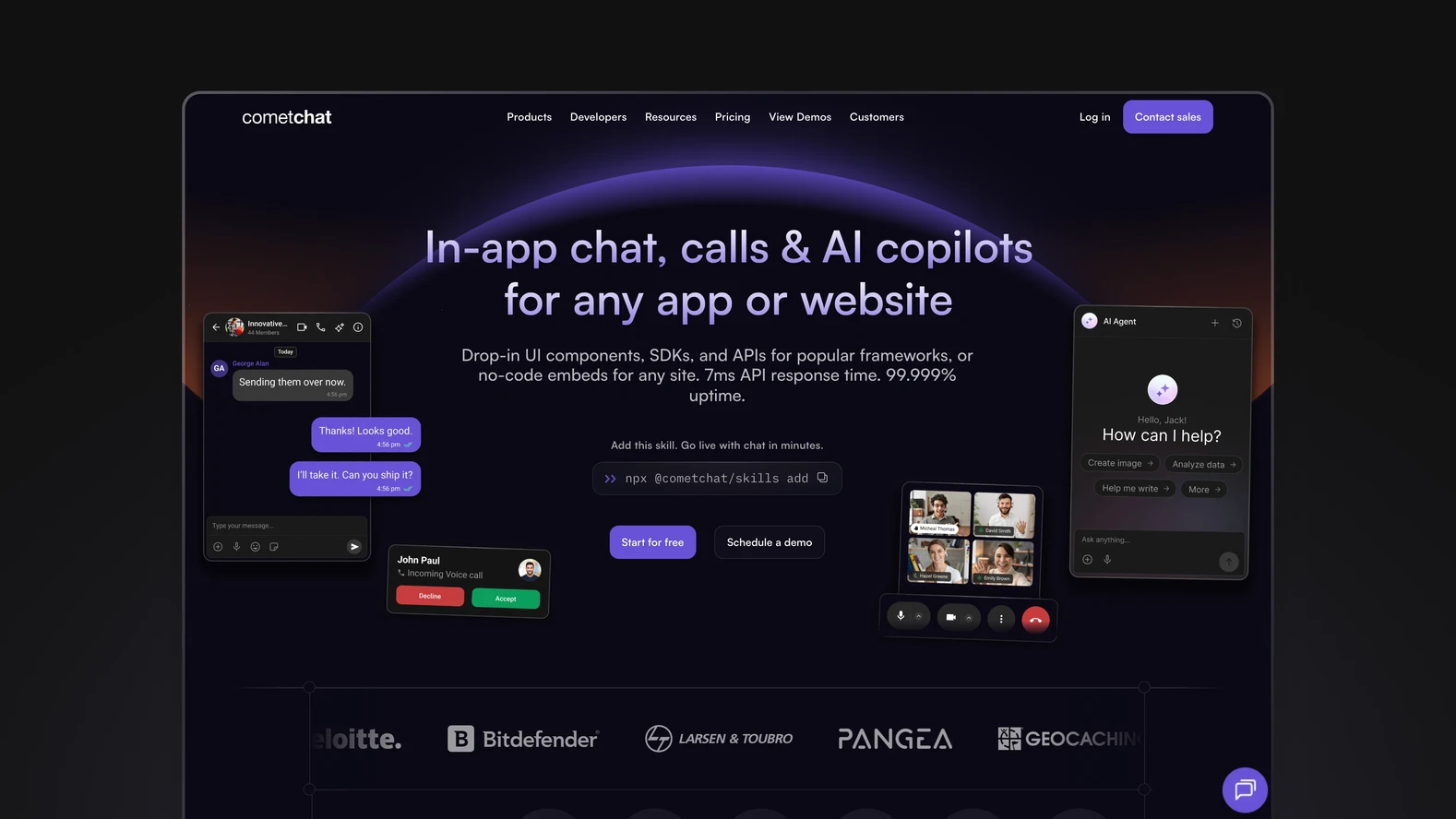
CometChat provides Chat and Voice/Video Calling SDKs with UIKits across React, React Native, Flutter, iOS, and Android. The platform includes a Widget Builder and UI Kit Builder for visual chat configuration, multi-tenant infrastructure, and on-prem deployment options. Compliance across ISO, HIPAA, SOC 2, GDPR, PIPEDA, and COPPA.
Key strengths:
- Multi-tenant infrastructure that lets marketplace platforms run separate branded chat environments for different sellers, store brands, or retail verticals from one backend, keeping buyer-seller conversations organized and isolated
- Widget Builder and UI Kit Builder that let retail teams configure branded chat visually, shipping a polished buyer-seller messaging experience without heavy front-end development
- Voice and video calling for personal shopping consultations, product demonstrations, and customer support that happens directly in the app
- Broad compliance coverage across ISO, HIPAA, SOC 2, GDPR, PIPEDA, and COPPA, relevant for retail platforms operating across multiple regulatory environments
Considerations:
- CometChat specializes in chat and calling. Social feeds, buyer-generated content, stories, live shopping, and broader community features beyond messaging are outside the platform's scope. Retail teams that want social commerce or content-driven discovery build those features separately.
- The multi-tenant advantage is most relevant for marketplace platforms with multiple sellers or brands. Single-brand retail apps without multi-tenant needs may not benefit from this differentiator.
Pricing: Free Build plan. Tiered MAU-based pricing. Enterprise includes custom pricing and zero overages.
Best fit: Marketplace platforms and multi-brand retailers that need branded buyer-seller chat across multiple storefronts, with multi-tenant isolation and visual builders for fast deployment.
Agora: Best for retail apps where live shopping video and interactive product demos are the primary community experience

Agora provides Voice Calling, Video Calling, Live Streaming, Broadcast Streaming, Chat, and Signaling SDKs with native support across iOS, Android, Web, React Native, Flutter, and Unity. The platform includes AI extensions for audio and video quality and a dedicated analytics product for session monitoring.
Key strengths:
- Live streaming SDKs built for the kind of interactive, high-quality video that live shopping demands, with low latency that lets hosts respond to viewer questions and reactions in real time
- AI extensions for adaptive video optimization that keep product visuals sharp and consistent across varying network conditions, which matters when accurate product representation drives purchase decisions
- Chat and signaling SDKs that integrate with live streams for viewer interaction during shopping events, enabling the real-time conversation that makes live commerce effective
- Agora Analytics for monitoring stream quality and viewer engagement, helping retail teams understand which live shopping sessions convert and where viewers drop off
Considerations:
- Agora's strength is real-time video and streaming. Social feeds, buyer-generated content, product tagging, stories, and community features beyond live sessions are outside the platform. Retail teams that want a social commerce and content layer alongside live shopping build those parts separately.
- Agora provides infrastructure and SDKs but no pre-built community or commerce UI components. The shopping experience around live video, including product cards, purchase prompts, and chat overlays, is built by your team.
Pricing: Per-product, usage-based pricing. Free minutes included. Enterprise is custom.
Best fit: Retail apps where live shopping, product demonstrations, and interactive video events are the primary community and commerce experience, and where video quality directly affects purchase decisions.
At-a-Glance Comparison
How to Choose the Right Community Platform for Your Retail or E-Commerce App
With five platforms covering different parts of the retail community experience, the decision comes down to four things.
Whether social commerce is part of the product strategy. If community content should lead directly to purchases through product tagging, shoppable posts, and commerce-aware feeds, evaluate platforms that connect social engagement to the purchase funnel natively. If community is primarily for buyer support and conversation, a chat-focused platform may be the better starting point.
Whether live shopping is core to the experience. Live commerce requires interactive video with low latency, real-time chat, and the infrastructure to handle concurrent viewers during peak shopping events. If live shopping is a primary revenue channel, prioritize platforms with proven streaming capabilities. If live is a future addition, a platform that covers content and chat first may make more sense today.
Whether you're building a single-brand app or a marketplace. Single-brand retail apps need community features that strengthen one brand identity. Marketplaces need multi-tenant infrastructure that keeps buyer-seller conversations organized across many storefronts. The platform architecture should match your commerce model.
How buyer trust and content quality factor in. Community content in retail directly affects purchase decisions. Fake reviews, spam, and misleading claims erode the trust that drives conversions. Evaluate whether the platform's moderation tools can maintain content credibility at the scale your marketplace or brand community produces.
The best community platform for a retail or e-commerce app is the one that connects social engagement to the shopping experience, supports the commerce mechanics your product depends on, and keeps buyer-generated content trustworthy as the community grows.