

The name 'Product Catalogue' implies a storefront. A price list. Inventory waiting to be sold. That framing makes sense for retail communities, and the commerce use case is genuinely powerful. But the underlying capability is much broader than that.
What the catalogue actually is: a structured, searchable inventory of things your community cares about. And every community has one of those, whether it has been named that or not.
A fitness platform has a catalogue of gear, equipment, and programs its members ask about constantly. An educational community has a catalogue of resources, tools, and courses that come up in every meaningful discussion. A travel platform has a catalogue of destinations, experiences, and itineraries that members reference in posts every day. A professional community has a catalogue of services, practitioners, or partners that members recommend to each other.
None of these require a price tag. What they require is a structured way to surface the right thing at the right moment in community content. That is exactly what the catalogue and tagging system is built to do.
The Underlying Problem This Solves
In most communities, the things members most want to find are scattered across posts, buried in threads, and impossible to discover unless you were there for the original conversation. A member asks what running shoes the coaches recommend. Forty people have answered this question across different posts over the past year. A new member has no way to find any of those answers.
The catalogue solves this by creating a single, searchable source for everything worth discovering in your community. The tagging connects those entries to the conversations where they are most relevant. When a coach posts a training tip and tags the specific equipment being used, that product becomes findable through the post and through search, now and for every member who discovers that content later.
This is not a commerce feature with the price removed. It is a discovery infrastructure that happens to work especially well for commerce when that is the goal. When the goal is something else, it works equally well for that.
Fitness & Wellness Platforms
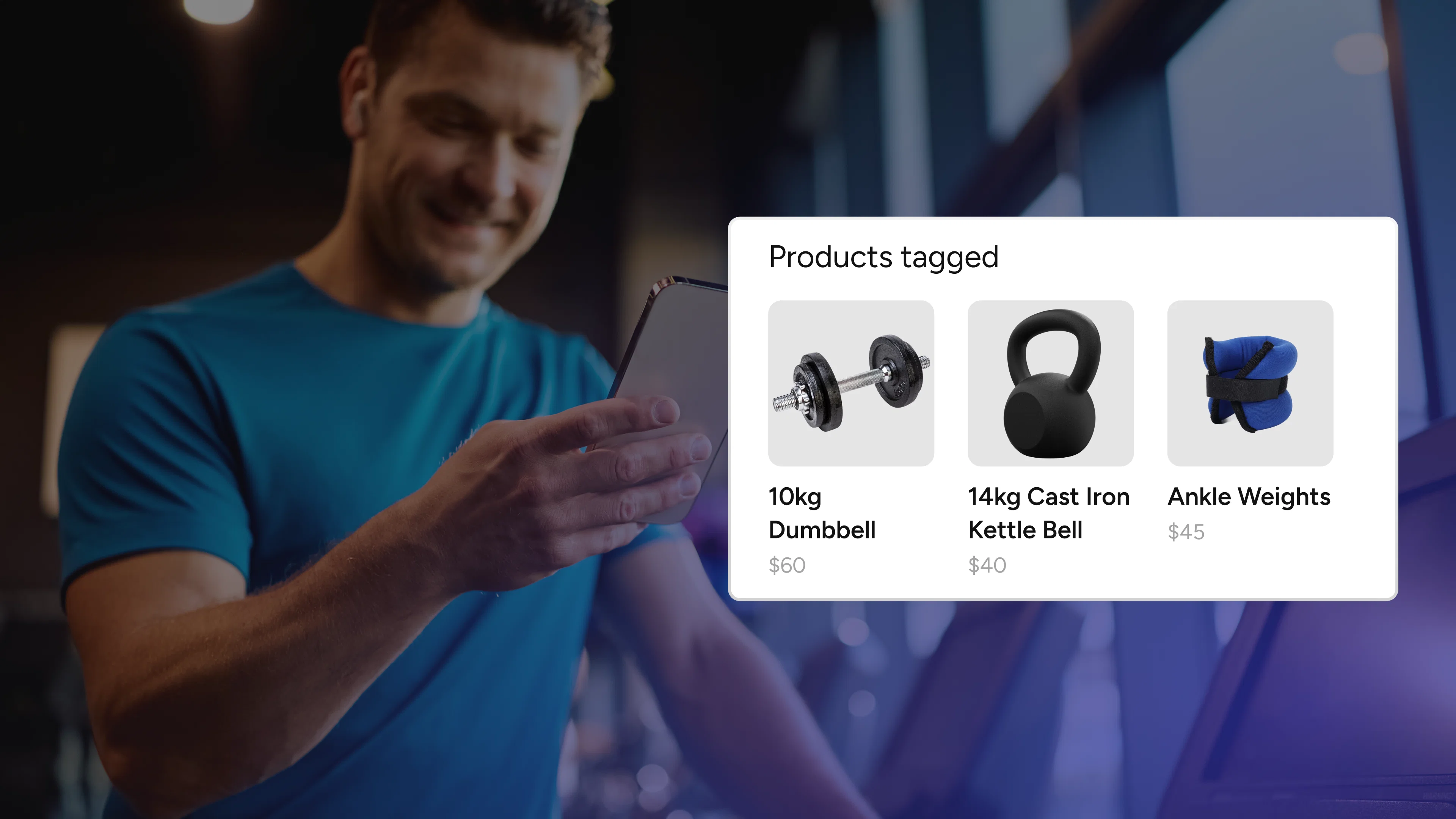
Members of fitness communities ask the same questions constantly: what equipment do you use, what program are you following, what do you recommend for someone at my level. These questions are asked in posts, in the comments of workout videos, in live Q&As, and in direct messages. The answers are given individually, repeatedly, and with no way for the next person to find them.
A fitness platform with a product catalogue turns that scattered knowledge into a permanent, discoverable resource. The catalogue entries are not products for sale. They are the gear, equipment, programs, and tools that are genuinely part of the community's practice.
- Equipment and gear. Resistance bands, weights, mats, shoes, trackers. When a coach posts a form correction video, the specific equipment being used can be tagged directly in the post. Members who want to train the same way can find exactly what they need without asking.
- Training programs. A structured program that members reference repeatedly becomes a catalogue entry. Tag it in posts about specific workouts, progress updates, or program reviews. Members discovering those posts later can tap through to the full program description or enrollment page.
- Recommended resources. Books, apps, recovery tools, nutrition guides. Things coaches recommend in live sessions or community posts that members immediately want to find but often cannot. A tagged reference creates a permanent trail back to the source.
The views and clicks data from non-commerce tags is just as useful as from a retail context. Which gear are members clicking on most? Which programs generate the most interest when tagged in content? That data tells you what your community's members are genuinely curious about and actively seeking, which is valuable information for content planning regardless of whether anything is being sold.
Educational and Professional Communities

Educational communities are built around the exchange of knowledge, and knowledge almost always references other resources: a book that shaped a framework, a tool that makes something possible, a course that goes deeper on a topic, a person whose work is worth following. These references are the substance of the community's intellectual life.
Without a catalogue, those references exist only in the posts where they were mentioned. With a catalogue, they become a living library that members can browse, search, and discover independently of the original conversations.
- Books and publications. A community where members discuss ideas and references books constantly. A catalogue of the books most central to the community's intellectual life, tagged in posts where they come up, turns every discussion into an entry point into the wider resource library.
- Tools and software. Professional communities recommend specific tools to each other all the time. When a post explains how to solve a specific problem, tagging the tool used in the solution lets members who find that post later go directly to the resource rather than searching for it separately.
- Courses and learning paths. An educational platform that runs its own curriculum can use the catalogue to surface specific courses in the context of the discussions where they are most relevant. A member engaged in a thread about a topic sees a direct path to deeper learning without leaving the community.
- Expert profiles and practitioners. A professional community often features recognized experts whose work members want to explore. A catalogue of practitioners, with links to their profiles or work, can be tagged in posts that discuss their ideas or reference their contributions.
On using URL fields for non-product entries: The URL field in a catalogue entry does not have to point to a purchase page. It can point to any destination that is the most useful next step for a member who wants to learn more: an author's website, a tool's documentation page, a course enrollment link, a practitioner's professional profile, or a destination's information page. The field is a link. Where that link goes is up to you.
Travel & Destination Platforms

Travel communities are organized around places. Members share experiences from destinations, ask for recommendations, plan trips based on what they have seen from other members, and return to the community when they are planning the next one. The problem is that destination information lives wherever the relevant post happens to be published, and finding it requires knowing that the post exists.
A destination catalogue solves this directly. Every place that comes up regularly in community content becomes a catalogued entry with a name, a description, and a URL pointing to the most useful information about it. When members post about a destination and tag it, that entry becomes part of a growing, searchable geography that new members can explore and that planning members can navigate.
- Destinations and locations. Cities, regions, specific landmarks, neighborhoods worth staying in. The catalogue becomes the reference layer beneath community content, so every post about a place contributes to a growing repository that is more useful than any single post alone.
- Experiences and activities. A guided hike, a cooking class, a specific market that only runs on weekends. Experiences that members rave about in posts can be catalogued and tagged so future members planning trips to the same destination can find them through the content that recommended them.
- Itineraries and trip plans. A community that produces trip reports and planning guides can catalogue those itineraries as standalone resources. Tagged in posts about specific destinations or travel styles, they become a searchable library of community-generated trip planning knowledge.
The click data from destination tags is particularly valuable for a travel platform because it reveals planning intent. A member clicking through to a destination entry is signaling active research interest in that place. That signal is useful for understanding which destinations are generating the most aspiration in your community and where to focus content production.
What the Catalogue and Tags Reveal Regardless of Category
One of the most consistent values of catalogue and tagging data across all use case types is what it reveals about the gap between what your community discusses and what your community actively seeks.
Not every topic that generates discussion also generates discovery intent. A post can have strong engagement, lots of comments and reactions, without members clicking through to find out more. Conversely, a post with modest engagement can have a high click rate on a tagged item, signaling that the content connected members with something they were genuinely looking for.
That distinction matters for content strategy across every community type. It tells you not just what your community talks about, but what your community actually wants to find. The two are often different, and knowing the difference is what separates content that fills a feed from content that serves a need.
Getting Started With Product Catalogue
The process of setting up a catalogue for non-commerce use is identical to the commercial setup. The fields are the same: name, description, thumbnail, URL, status. The only difference is what those fields point to.
A useful starting exercise is to list the ten things your community references most often in posts and discussions. The gear that comes up constantly in a fitness community. The books that get mentioned repeatedly in a professional community. The destinations that every travel conversation circles back to. The tools that practitioners recommend to each other every week.
Those ten things are your first catalogue entries. Add them, set them to Active, and start tagging them in the posts where they are most naturally relevant. The data from those first tags will tell you whether the discovery experience is working and which entries are generating the most interest.
Build from there. The catalogue grows most naturally when tagging becomes a habit in your content workflow, not a project to set up all at once. Every time a post references something worth discovering, that thing is a candidate for a catalogue entry. Over time, the catalogue becomes a living index of your community's collective knowledge, surfaced exactly where members need it.