
How to Structure Events for Your Community: A Playbook for Every Platform Type
A community event that works well for a fitness platform will look almost nothing like one designed for a fan community or a retail brand. The format, cadence, content structure, and success metrics are all different. What stays constant is the underlying principle: events work when they are built around what that specific community needs from a live moment.
This guide gives a concrete event structure for four community types, covering what each format should look like in practice, how to build a programming cadence that creates habits, and what to measure after each event to improve the next one.
Fitness and Wellness Platforms
Fitness communities are built on one of the most powerful behavioral drivers there is: accountability. Members who work out alongside others, even digitally, are significantly more likely to complete a session and return for the next one. Events are not supplementary to a fitness platform's value. For the best ones, they are the value.
Over 70% of successful fitness outcomes are linked to high social connectivity within the platform. That means a fitness platform that runs regular live events is not just offering a feature. It is materially improving the results its members get, which is the most powerful retention mechanic available.
The Live Workout Session
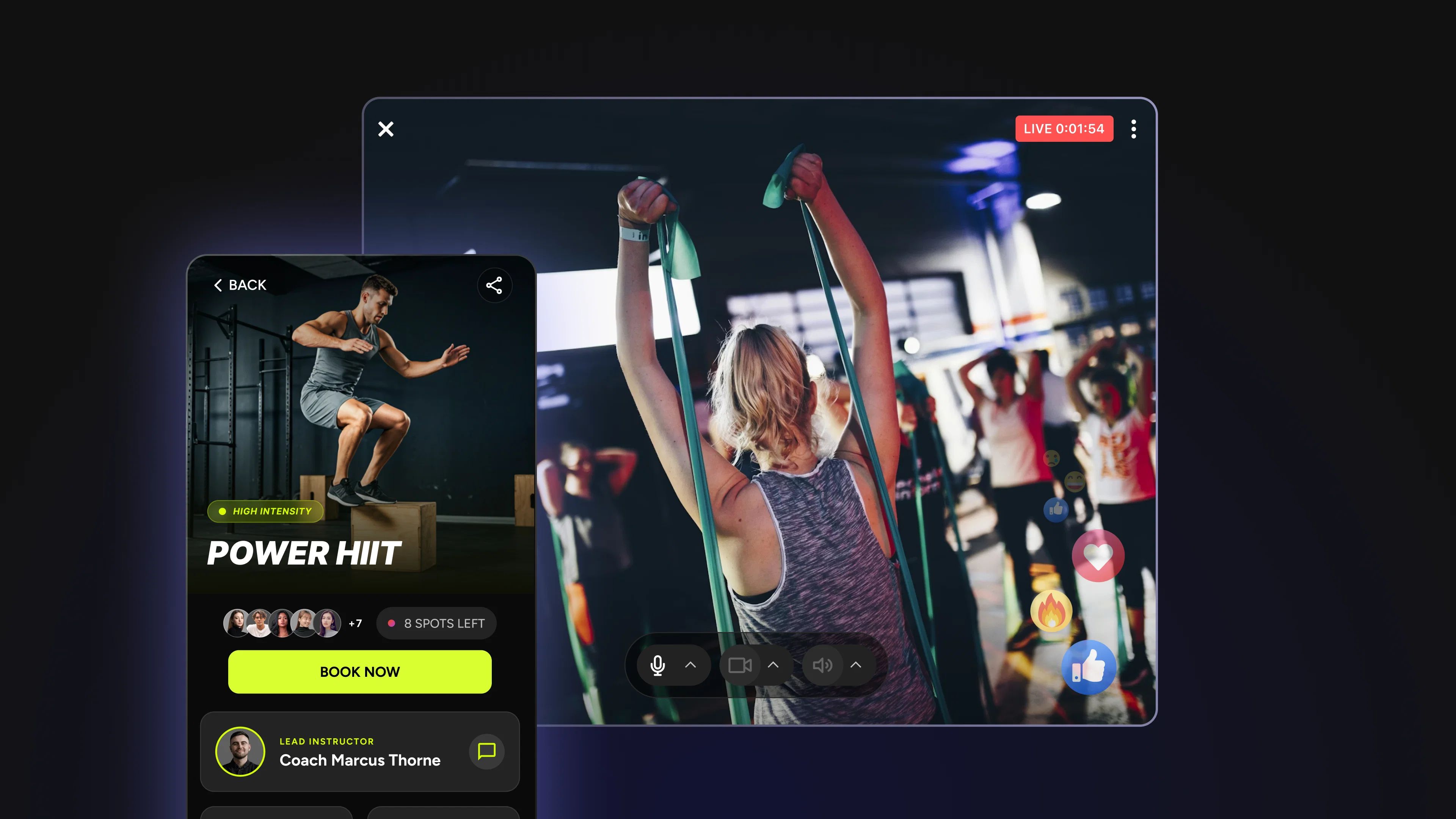
Before The Event
- Publish the session details three to five days in advance: workout type, duration, coach name, and intensity level. Members need enough information to commit to showing up.
- Send an RSVP reminder 24 hours out that previews one specific thing from the session, a new movement being introduced, a milestone the community is working toward, or a challenge being added. Give members something to anticipate beyond the workout itself.
During The Event
- Open the first two minutes with energy, not logistics. Welcome the group, name the session goal, and start moving. Members who joined for accountability need to feel the energy of the group immediately.
- Acknowledge the live attendee count early and call it out as part of the experience. How many people are working out together right now is a motivating number. Use it.
- Use a co-host or coaching partner for sessions longer than 30 minutes. The back-and-forth between two coaches sustains energy in a way a solo host cannot maintain across a full session.
- Build in one interaction moment mid-session: a check-in, a form question, or a community callout. This resets attention and reinforces that this is a shared experience, not a video they are watching.
After The Event
- Post a completion callout in the community feed within an hour. Members who finished the session should feel acknowledged. This is a simple action with outsized impact on retention.
- Track completion rate and average watch time across sessions. A declining watch time on a recurring format is the earliest signal of content fatigue, long before RSVP numbers start to drop.
Cadence to build toward: Weekly live workouts as the anchor. Monthly challenge events, a 30-day streak, a community milestone, a special guest coach, as the high-commitment moments that renew energy and attract members who may have drifted from the weekly format.
Retail and Brand Communities
Retail events operate on a different psychological lever than fitness events. The driver is not accountability. It is exclusivity and urgency. Members who show up to a retail livestream event are there because something is happening right now that they cannot access any other way. That dynamic, when it is engineered deliberately, is one of the most effective commercial mechanisms available to a brand community.
Live shopping events generate conversion rates as high as 30%, nearly ten times the standard rate for e-commerce. The gap is not accidental. It is a direct result of the combination of real-time product demonstration, live Q&A, and the social proof of watching others engage and purchase alongside you.
The Collection Drop or Product Launch
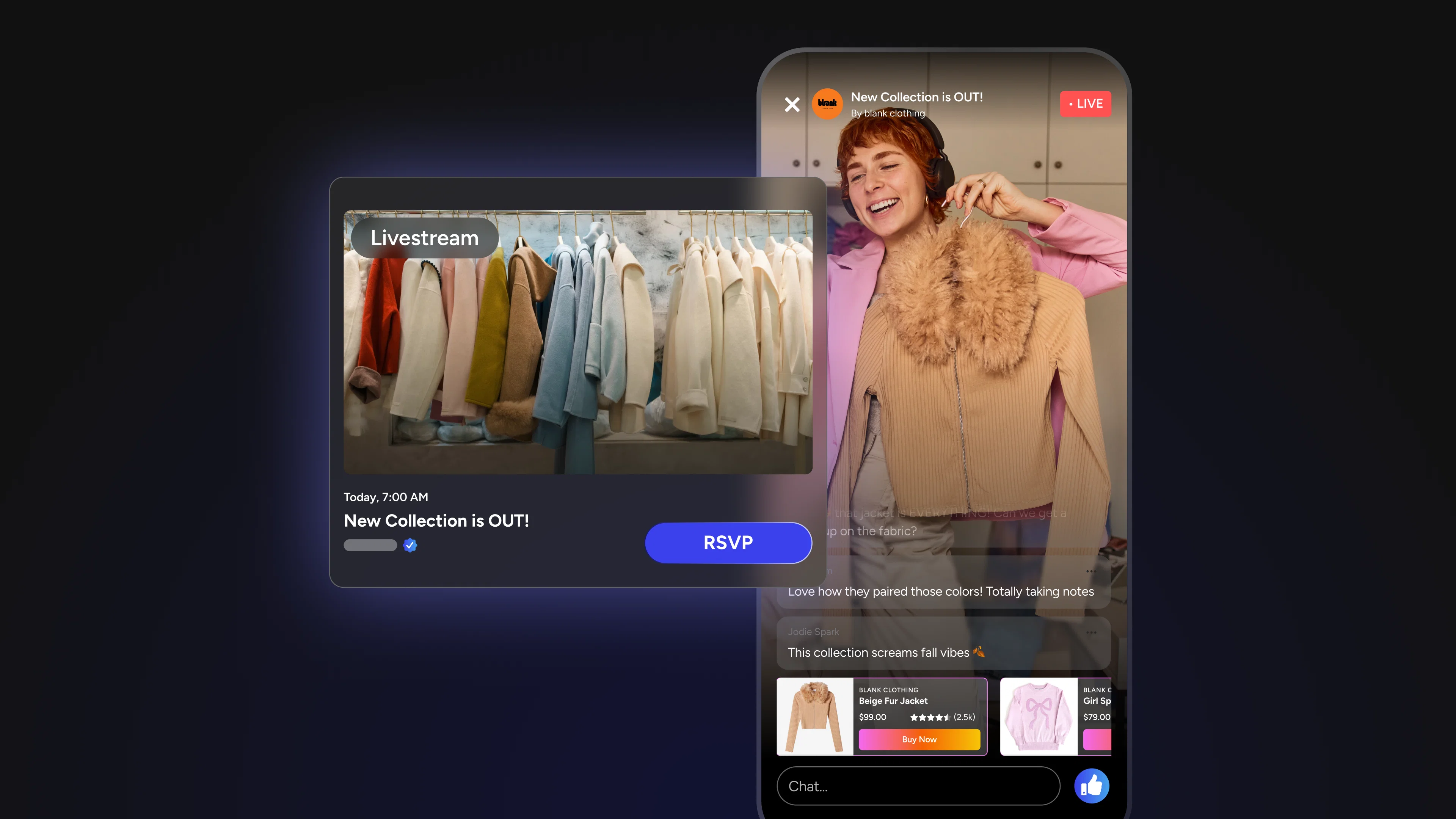
Before The Event
- Tease the event at least a week in advance with selective details. Show enough to create curiosity, not enough to satisfy it. The gap between what members know and what they will find out at the event is what drives RSVPs.
- Make the RSVP feel like it matters. Members who register should receive a pre-event message confirming their access and framing the event as a members-only or early-access experience. The distinction between attending and missing out should feel real.
During The Event
- Open with the product, not the setup. The first reveal should happen in the first two minutes. Members who showed up expecting a launch should see it immediately.
- Structure the event around demonstration, not description. Show the product being used, worn, or experienced. Answer the questions that drive hesitation: how does it fit, what does it feel like, who is it for. Live product demos have a direct effect on reducing returns because buyers understand what they are purchasing.
- Build in at least one live-only offer: a discount, a bundle, an early-access SKU, or exclusive access that expires when the stream ends. The fear of missing out is the most reliable conversion driver in live commerce, and it only works if the offer is genuinely unavailable elsewhere.
- Use multi-stream support to show the product from multiple angles simultaneously where the format allows. A skincare brand demonstrating application, a fashion brand showing fit on multiple body types, a product that benefits from showing the detail and the context at the same time.
After The Event
- Send a follow-up to attendees within 24 hours with access to the product and a recap of anything covered during the stream. For members who missed the event, send a separate message that references what they missed and links to the next scheduled event.
- Track attendee-to-purchaser conversion rate as the primary success metric for retail events. Engagement numbers matter, but this is the number that tells you whether the event format is working commercially.
Cadence to build toward: Monthly collection drops or product launches as the primary programming. Quarterly in-person events for high-value members as the high-commitment relationship moment. The livestream builds the habit. The in-person event is the reward.
Fan and Interest Communities
Fan communities are structured around a shared subject of passion: a team, an artist, a franchise, a genre, a world. What members are looking for from events is not information or access to products. They are looking for the experience of being in the room with other people who care as much as they do. That is a fundamentally different brief, and it requires a fundamentally different event structure.
The most successful fan community events are participatory, not broadcast. The value is in the collective experience of watching, reacting, and sharing in real time. A watch party works because it transforms a solo activity into a shared one. A live discussion works because the conversation between fans is as interesting as anything the host says.
The Watch Party or Live Discussion
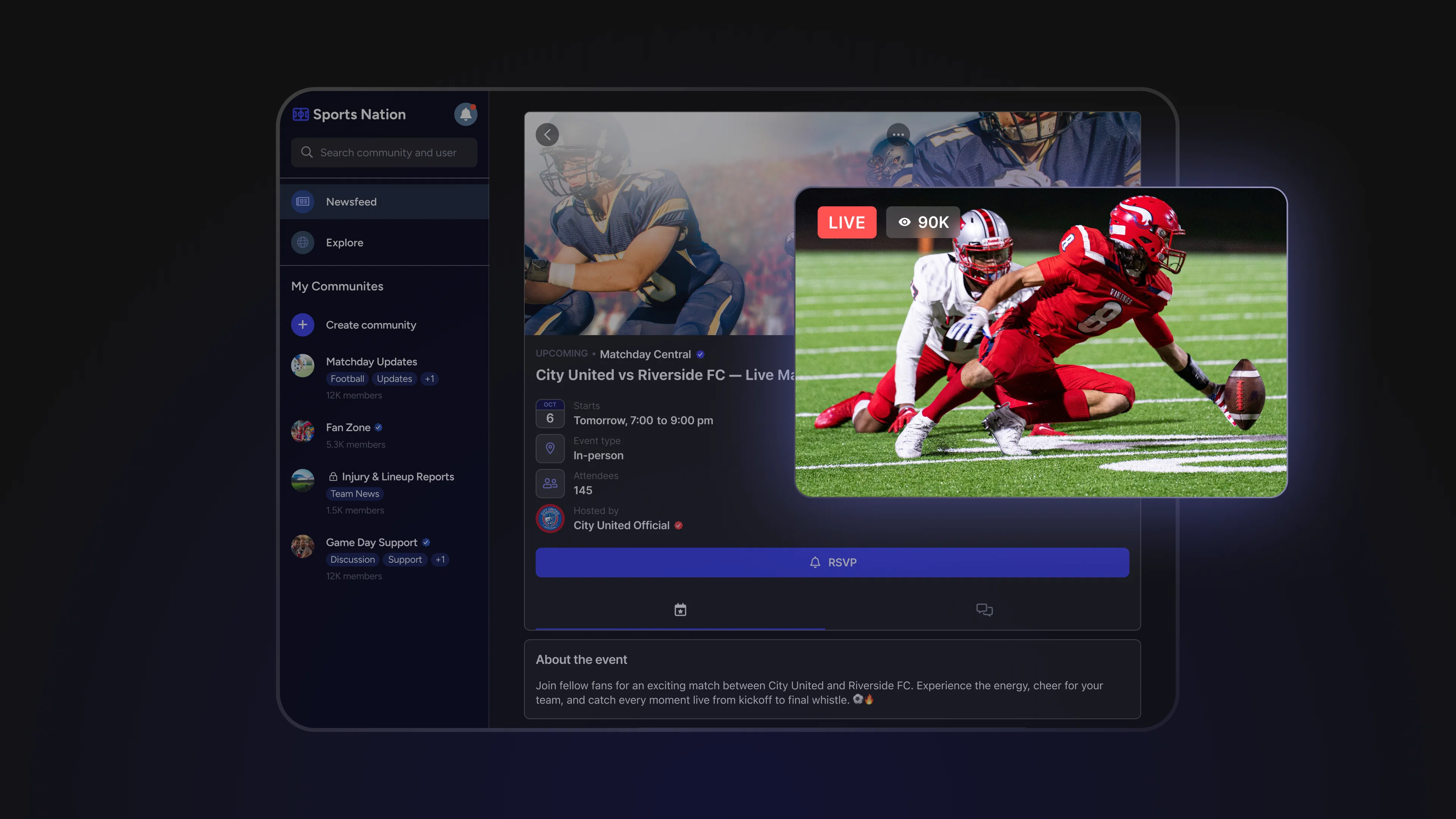
Before The Event
- Frame every event around a specific shared moment: a season premiere, a major game, an album release, an anniversary. The event needs a clear reason to exist on this specific date. Fan communities with strong recurring events almost always anchor them to the content calendar of whatever they are a community around.
- Use the RSVP confirmation to prime the conversation. Share a talking point, a piece of speculation, or a question to think about before joining. Members who arrive having already thought about the topic are more likely to participate actively from the start.
During The Event
- Design the event around reaction and discussion, not just presentation. The host's job is to facilitate the room, surface the best contributions from the chat, and keep the energy of the collective experience alive. A fan event where the host talks at the audience misses the entire point.
- Keep moderation active and visible. Fan communities can move very fast in the chat during high-emotion moments. A moderator who is actively surfacing the best contributions and managing the volume creates a much better experience than one who is only removing bad content.
- Use the live attendee count as part of the experience. Calling out the number of people watching together at key moments reinforces the shared nature of the event. This is particularly effective during moments of high collective emotion.
After The Event
- Post an event recap that captures the best moments from the community discussion, not just the content. The best lines from the chat, the questions that sparked the most debate, the predictions that turned out to be right or wrong. This creates a record of the community's collective reaction, not just the event itself.
- Measure engagement rate and session length as the primary metrics. For fan communities, depth of engagement matters more than breadth of reach. A 45-minute average session time with a highly active chat is a better result than 10,000 viewers with low interaction.
Cadence to build toward: Content-anchored events tied to the release calendar of whatever drives the community. Plus a recurring lightweight format, a weekly predictions thread turned live discussion, a monthly theory deep-dive, that keeps the community active between the major moments.
Travel and Destination Platforms
Travel communities occupy a unique position in the event landscape. The core experience they are built around, being somewhere, is inherently visual and experiential. A live event from a destination does something no photo or written guide can replicate: it puts members in the moment of being there, with all the texture, spontaneity, and sensory detail that implies.
The event structure for a travel platform is less about programming content and more about creating presence. The goal is to make a member feel, briefly and convincingly, that they are standing in a place they want to be. That feeling drives the aspiration and planning behavior that a travel community is ultimately built to support.
The Live Destination Experience
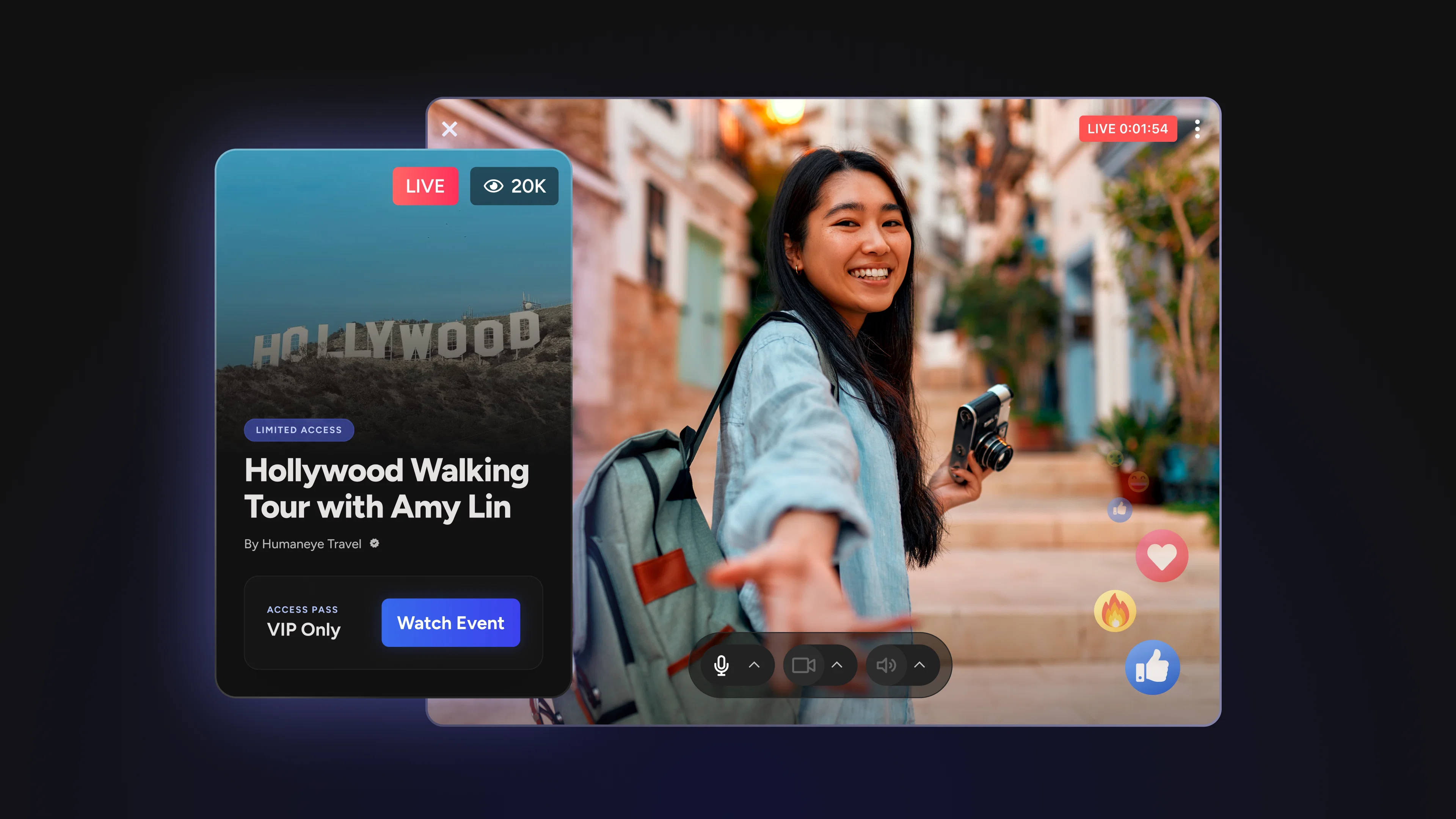
Before The Event
- Build anticipation with destination-specific detail in the event description. Not 'join us live from Kyoto' but 'we are going live at 7am local time from Fushimi Inari before the crowds arrive. We will be walking the full path and answering your questions live.' The specificity creates a mental picture that generates genuine anticipation.
- Invite questions before the event starts. A travel community's most engaged members have specific things they want to know about a destination. Collecting questions in advance and promising to answer them during the stream gives members a personal stake in attending.
During The Event
- Prioritize presence over production. A travel livestream that shows something real, the actual light, the actual sound, the actual pace of a place, is more valuable than a polished, scripted production. Authenticity is the competitive advantage of live over any other content format.
- Structure the event around discovery moments: a street that opens up into a surprising view, a market stall worth stopping at, a local interaction that reveals something about the culture. The best travel content is a series of these moments, not a monologue about them.
- Answer destination questions live from the audience. The combination of real-time visual context and real-time expert answer is something no travel guide or pre-recorded video can provide. A member watching a live Q&A about where to eat in a neighborhood while the host is physically standing in that neighborhood is getting genuinely useful, unreplicable information.
After The Event
- Make the event discoverable as a destination resource after it ends. A member planning a trip to a destination six months from now should be able to find and watch your past live event from that place as part of their research. Past events that are discoverable and replayable extend their value significantly beyond the live moment.
- Track which destinations drive the highest attendance and engagement. Over time, this data builds a clear picture of where your community's travel aspiration is concentrated, which should directly inform your events programming calendar.
Cadence to build toward: Destination-led events timed to peak planning seasons for that location. Plus a recurring community format, a monthly 'where should we go next' discussion or a travel Q&A with a community member who just returned from somewhere, that keeps the platform active between destination broadcasts.
The Principle Across All Four
Each of these community types has a different primary value: accountability for fitness, exclusivity for retail, shared passion for fan communities, and presence for travel. The event structure that works is the one built around that specific value, not a generic format applied uniformly.
The practical starting point is the same regardless of community type. Run one event. Build the structure deliberately. Measure what the data tells you about how your specific audience is engaged. Then adjust the next one based on what you learned.
social.plus Events provides the infrastructure for all four formats in one place: scheduling, discovery, RSVP, automated reminders, live co-streaming, real-time moderation, and analytics. What you build on top of that infrastructure is entirely specific to your community and what it needs from a live moment.