In-Person, Digital, or Livestream: How to Choose the Right Format for Every Event
The most consequential decision you make for any community event happens before you write the description, set the date, or send a single invitation. It is the format decision. Format is not a logistical detail, it is a strategic one.
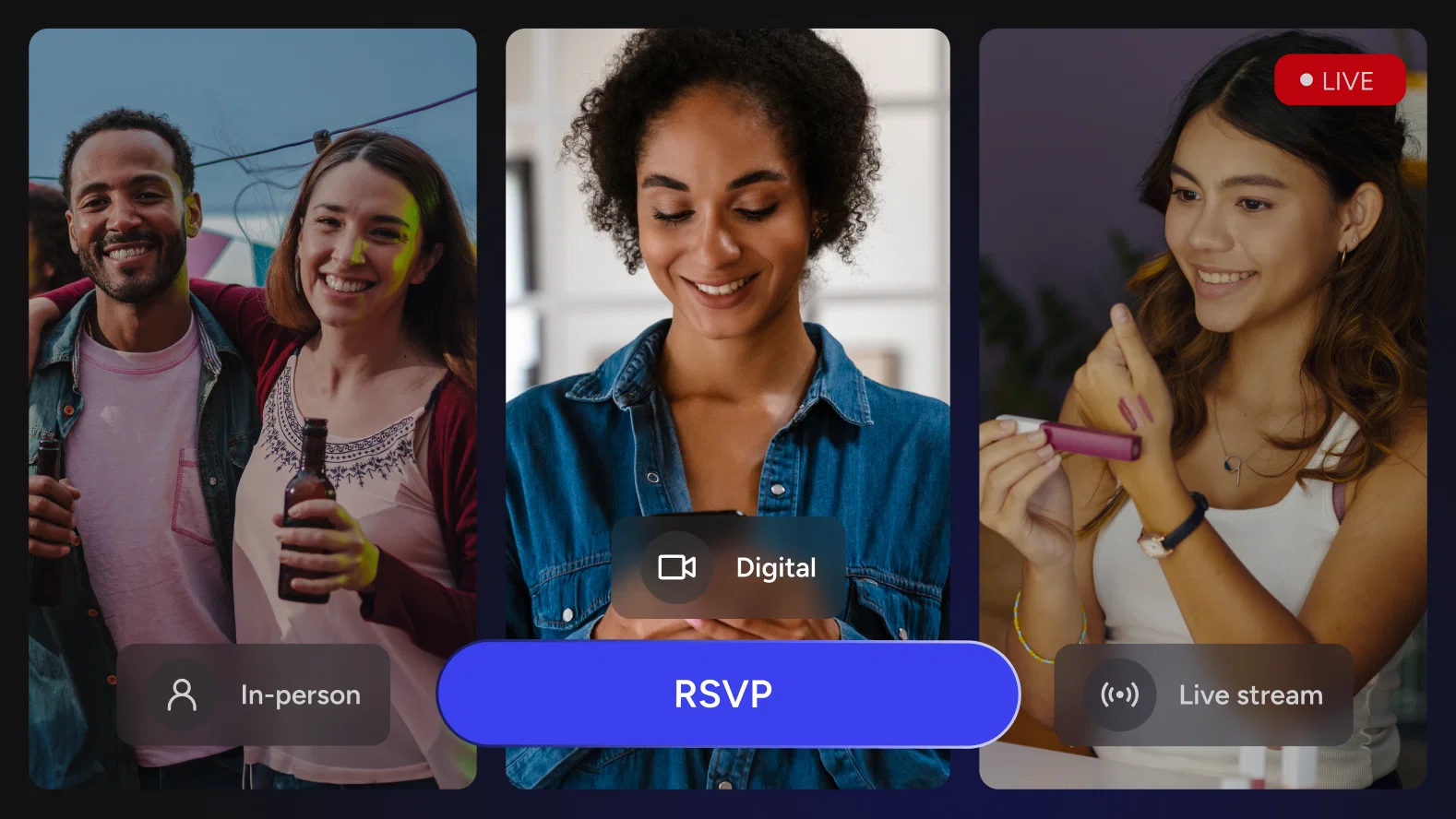
Each of the three formats available in social.plus Events, in-person, digital, and livestream, is built for a different goal, a different audience behavior, and a different kind of community moment. This guide walks through what each format is actually designed to do and the questions worth asking before you choose.
In-Person: When Depth and Presence Are the Point
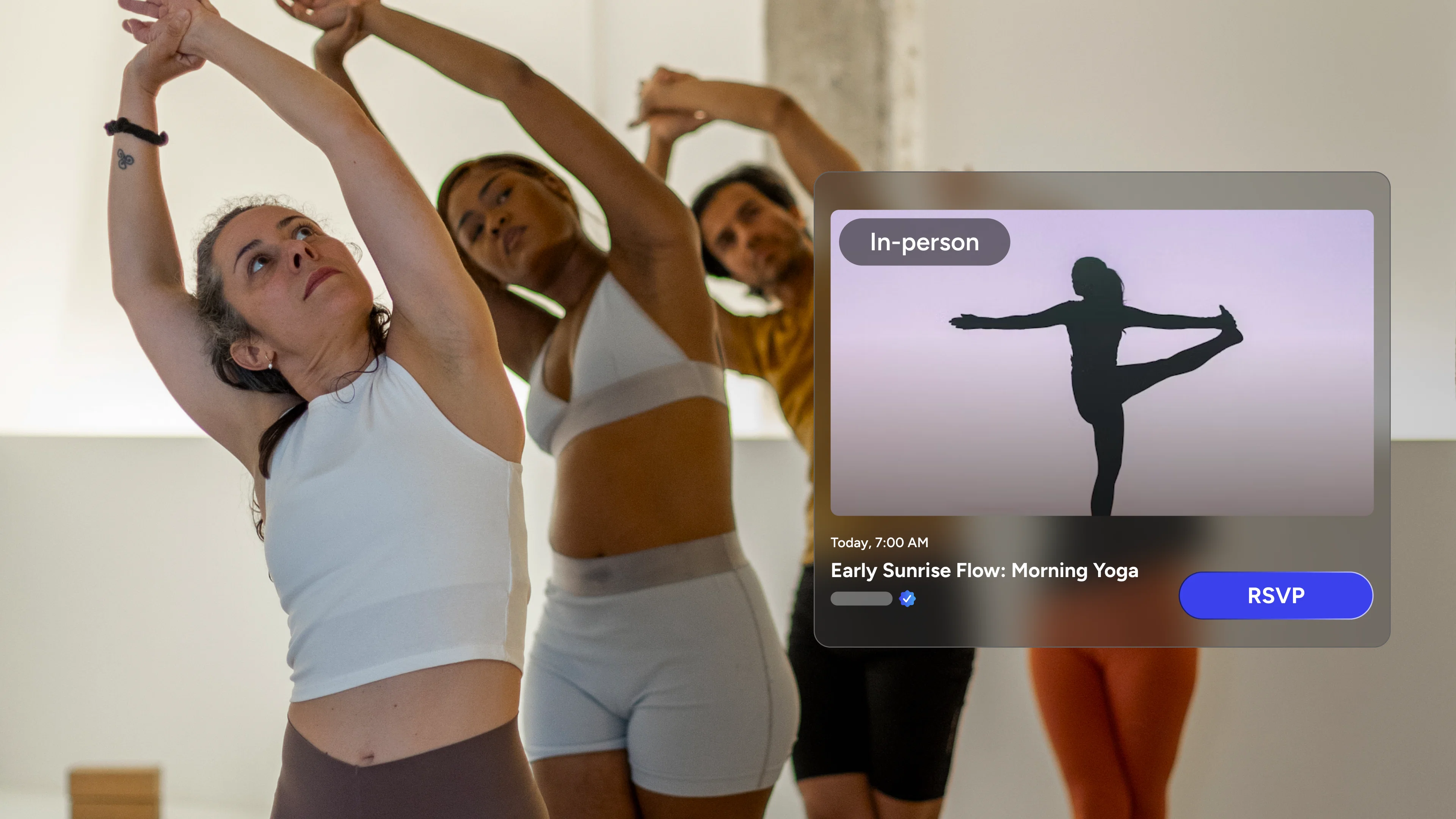
In-person events deliver something no digital format can fully replicate: the weight of shared physical presence. When your members are in the same room, the quality of attention is different. Conversations are unscripted. Relationships form in ways that do not happen in a chat window. The experience is harder to produce but harder to forget.
This is reflected in how attendees themselves describe it. 70% say in-person events provide the best environment for learning and professional development, and 71% say in-person conferences are the most effective way to learn about new products and services. Those numbers are not surprising to anyone who has run both formats. The depth of engagement available in a room simply has no digital equivalent.
But in-person events carry real costs. They are geographically constrained, logistically intensive, and they ask more of your members than any other format. Attendance requires a physical commitment that digital formats do not. That threshold is not always a disadvantage. When members make the effort to show up in person, they have already signaled a higher level of investment in the community. The challenge is making sure the experience justifies that investment.
In-person works best when:
- The goal is relationship depth, not reach. Workshops, member meetups, product experiences, and community milestones all benefit from physical presence in ways that are difficult to achieve digitally.
- Your audience is geographically concentrated enough to make attendance practical. A global community with members spread across time zones is poorly served by an in-person-only event.
- The experience itself requires physicality. Fitness events, tasting experiences, hands-on demonstrations, and anything where tactile engagement is part of the value cannot be replicated on a screen.
Watch for: In-person micro-events, smaller and more focused gatherings rather than large-scale productions, increased 16% in 2024. Companies investing in them are 15% more likely to see strong year-over-year growth. Smaller, more intentional in-person events often outperform large-scale ones on engagement and community impact.
Digital: When Reach and Accessibility Drive the Decision
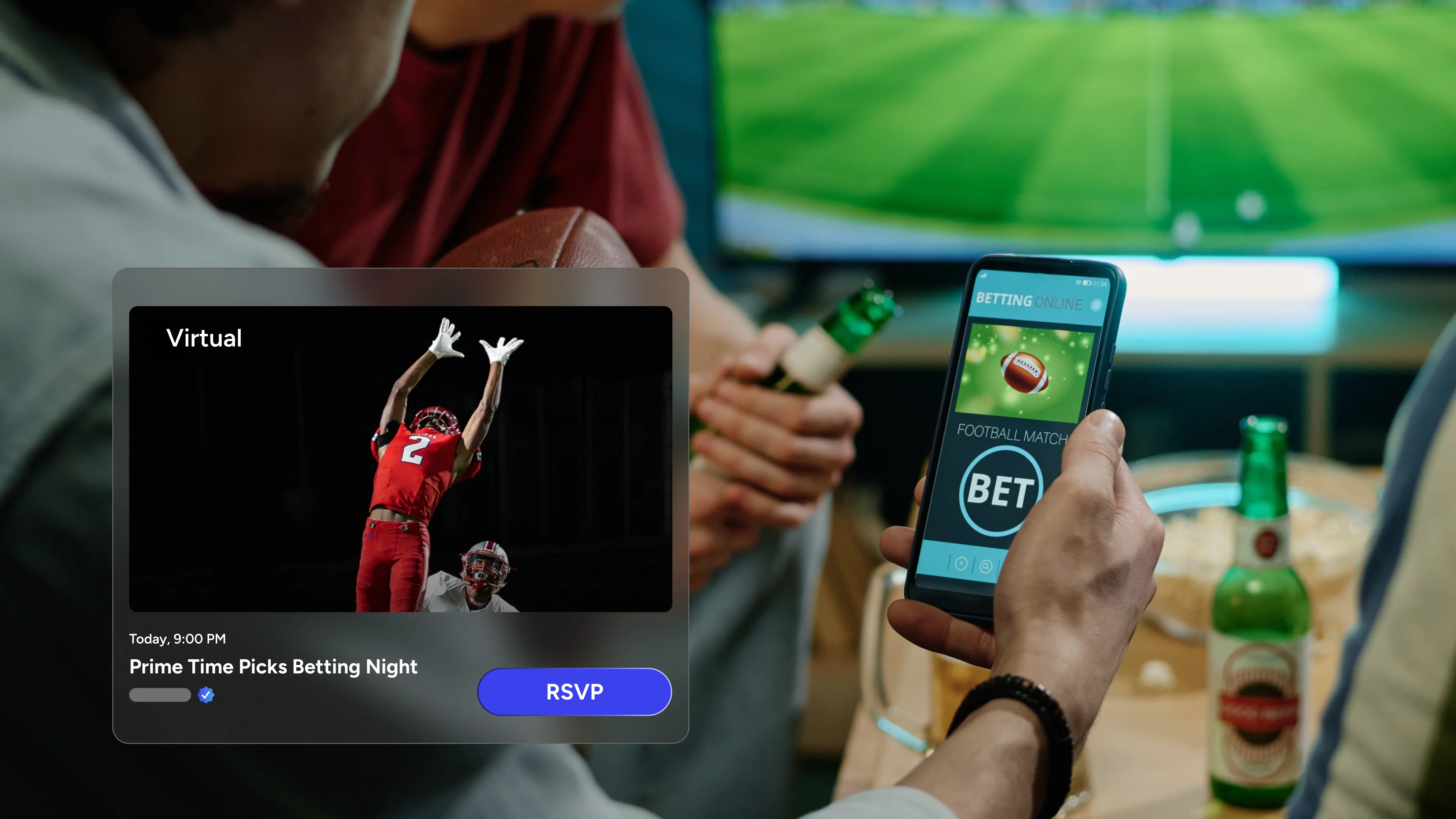
Digital events remove the single biggest barrier to attendance: geography. Your entire community can participate regardless of where they are, what time zone they are in, or whether they can make the trip to a physical venue. That accessibility is not a consolation prize for communities that cannot afford in-person events. It is a genuine strategic advantage for communities where broad participation is the goal.
The scale potential is real. 83% of digital event hosts report larger turnouts compared to in-person equivalents. For a community trying to activate its full membership, run educational programming, or deliver consistent value to members who are spread across regions, digital events are simply the more practical format.
The challenge with digital is engagement. Without the ambient energy of a physical room, attention is more fragile. Members are a single tab-switch away from something else. The events that perform best in digital formats are the ones that are built for the medium rather than adapted from in-person formats. Shorter runtimes, interactive elements, structured participation, and a clear value proposition communicated in the first few minutes all matter more in digital than they do in person.
Format length is worth calibrating carefully. 63% of attendees say the ideal length for a digital session is between 60 and 90 minutes. Beyond that window, engagement drops significantly regardless of content quality.
Digital works best when:
- Your community is distributed across geographies and time zones, making in-person impractical for a significant portion of members.
- The goal is education, information, or community-wide announcements where broad participation matters more than depth of interaction.
- You are running recurring programming, weekly sessions, regular check-ins, or anything where consistency and low friction for attendees is essential.
- You want a content asset after the event. Digital sessions are easily recorded, repurposed, and made available on demand, giving the event a lifecycle that extends well beyond the live moment.
Livestream: When Energy, Urgency, and Real-Time Connection Are the Goal
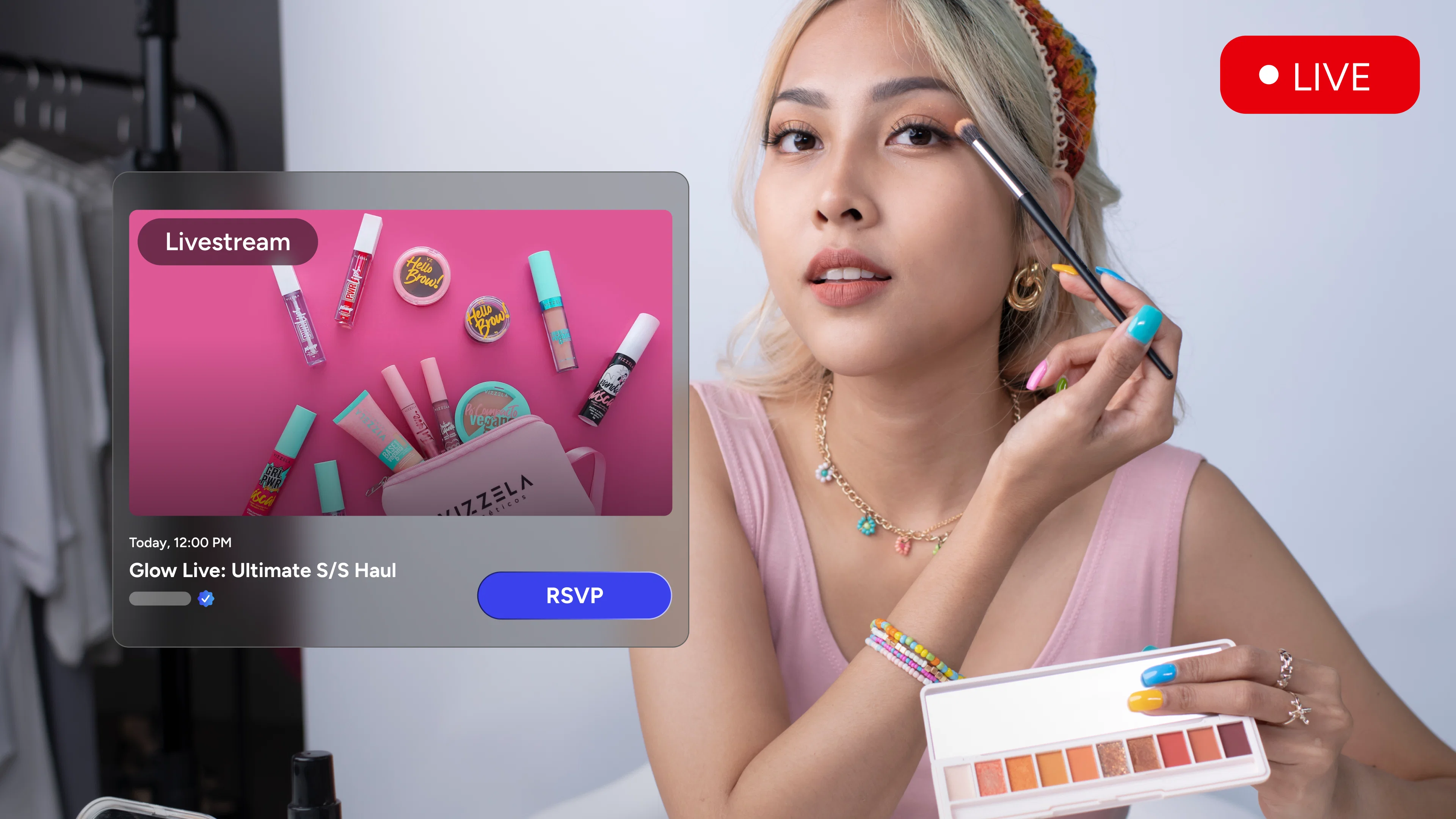
Livestream occupies its own category. It is not simply a digital event with a camera. It carries something that pre-recorded and structured digital formats cannot replicate: the shared experience of something happening right now. Viewers know they are watching live. They know others are watching alongside them. That collective presence changes how people engage with the content.
This is why livestream works particularly well for moments that have inherent energy. Product drops, exclusive reveals, live Q&As with hosts or guests who have an existing audience, real-time community events where the spontaneity is part of the appeal. The format rewards authenticity in a way that highly produced digital events do not, and it punishes over-scripting in a way that in-person events can absorb.
Livestream is also the format where the connection between Events and the broader platform experience matters most. When a live event begins and a Live Now ring appears on a member's story, the entire community is notified in a way that creates immediate urgency. Members who were not planning to attend can be pulled in by that signal in a way that a calendar invite or reminder notification cannot replicate.
Livestream works best when:
- The event has a real-time element that cannot be replicated on demand. Announcements, reveals, live performances, and anything where being first matters to your audience.
- Your host or guests have an existing audience relationship. Livestream rewards personality and presence. The more your audience connects with the people on screen, the stronger the retention.
- You want broad, low-friction reach across your community without the logistical requirements of a physical event.
- The event is part of a recurring series. Livestreams build habitual viewing behavior in a way that one-off events do not. A weekly live workout, a monthly Q&A, or a regular community check-in trains your audience to show up.
Five Questions to Ask Before You Choose a Format
The right format is not always obvious from the event description alone. These five questions cut through the ambiguity and point you toward the decision that serves your community best.
1. What do you want members to do, not just feel?
If the answer is to connect with each other, choose in-person. If it is to learn something or receive information, digital works well. If it is to show up right now and experience something together, livestream is the stronger choice. Clarity on the intended action shapes everything else.
2. Where is your audience physically?
A community with members concentrated in one city has real options for in-person. A community spread across ten countries does not. Format decisions made without accounting for geography often result in strong programming that only a fraction of the community can access.
3. How much friction can your audience reasonably absorb?
In-person asks for travel, scheduling, and physical presence. Livestream and digital ask only for a device and a few minutes of attention. When attendance is the primary concern, lower-friction formats consistently outperform higher-friction ones. When depth and commitment are the goal, some friction is not only acceptable but strategically useful.
4. Does this event have value after it ends?
If the answer is yes, digital and livestream both produce content assets that can be made available on demand, shared with members who could not attend, or repurposed into other content. In-person events are largely ephemeral by nature. That is part of what makes them valuable in the moment. It is also a meaningful constraint when you are thinking about the content lifecycle.
5. Is this a one-time moment or part of a recurring cadence?
One-time moments, community milestones, product launches, and special guests, can justify higher-friction formats because the occasion itself creates motivation to attend. Recurring events need to be low-friction to build the habit of participation over time. The format that works for a quarterly conference is often the wrong choice for a weekly community session.
When to Run Multiple Formats Together
Format decisions are not always binary. Some events are better served by a combination, a livestream component that opens the event to a broader audience while an in-person group gathers to watch together, or a digital event that is recorded and made available after a live session concludes.
74.5% of event planners have adopted hybrid approaches that blend in-person and digital components, though the data is clear that this only works well when both audiences are designed for intentionally. Running a hybrid event where the digital experience is an afterthought consistently underperforms running two separate, well-designed format-specific events. If you are going to run multiple formats simultaneously, the question to ask is: does each audience have everything they need to have a complete experience, or is one of them watching a lesser version of what the other audience is getting?
The social.plus Events infrastructure supports all three formats from a single console. That flexibility makes it practical to match the format to the moment rather than defaulting to whatever your team is most comfortable producing. The goal is not to use every format. It is to use the right one, deliberately, every time.
Start Configuring Your Next Event
In social.plus Events, format selection is part of the initial event configuration: name, description, date and time, and format, all set from the console before publishing. Every event type has the same foundation: a dedicated discovery page, automated reminders, an attendee list, and analytics that tell you what drove people to show up and what kept them there.
The format is your first decision. Everything that follows builds on it.