
Live chat used to mean a support widget bolted onto the corner of a website. By 2026 it means something broader: the always-on messaging layer inside apps and products that users expect by default, whether they're talking to a brand or to each other. The live chat statistics below are refreshed for 2026 and organized around four questions that matter to brands and apps building on chat infrastructure: how much users already rely on messaging, what response times they now expect, how chat measurably affects retention and conversion, and where group chat is heading.
Live chat used to mean a support widget bolted onto the corner of a website. By 2026 it means something broader: the always-on messaging layer inside apps and products that users expect by default, whether they're talking to a brand or to each other. The live chat statistics below are refreshed for 2026 and organized around four questions that matter to brands and apps building on chat infrastructure: how much users already rely on messaging, what response times they now expect, how chat measurably affects retention and conversion, and where group chat is heading. Every figure is attributed to its original source and year, because a stat from a few years ago tells you very little about what a user expects from your product this quarter.
Why live chat statistics matter more in 2026
Chat is no longer a support-channel afterthought. It is the default interface users reach for first, inside and outside the apps they open every day.
Chat and messaging apps now reach 94.1% of the world's internet users every month, more than any other category of online activity (Statista/DataReportal, Q2 2025). That baseline shapes what users expect from every product, not just the ones built for messaging. 61% of consumers name messaging or live chat as their preferred customer service channel, ahead of phone, email, and social media (HubSpot State of Customer Service, 2025), and 74% of consumers now expect customer service to be available around the clock (Zendesk CX Trends, 2026).
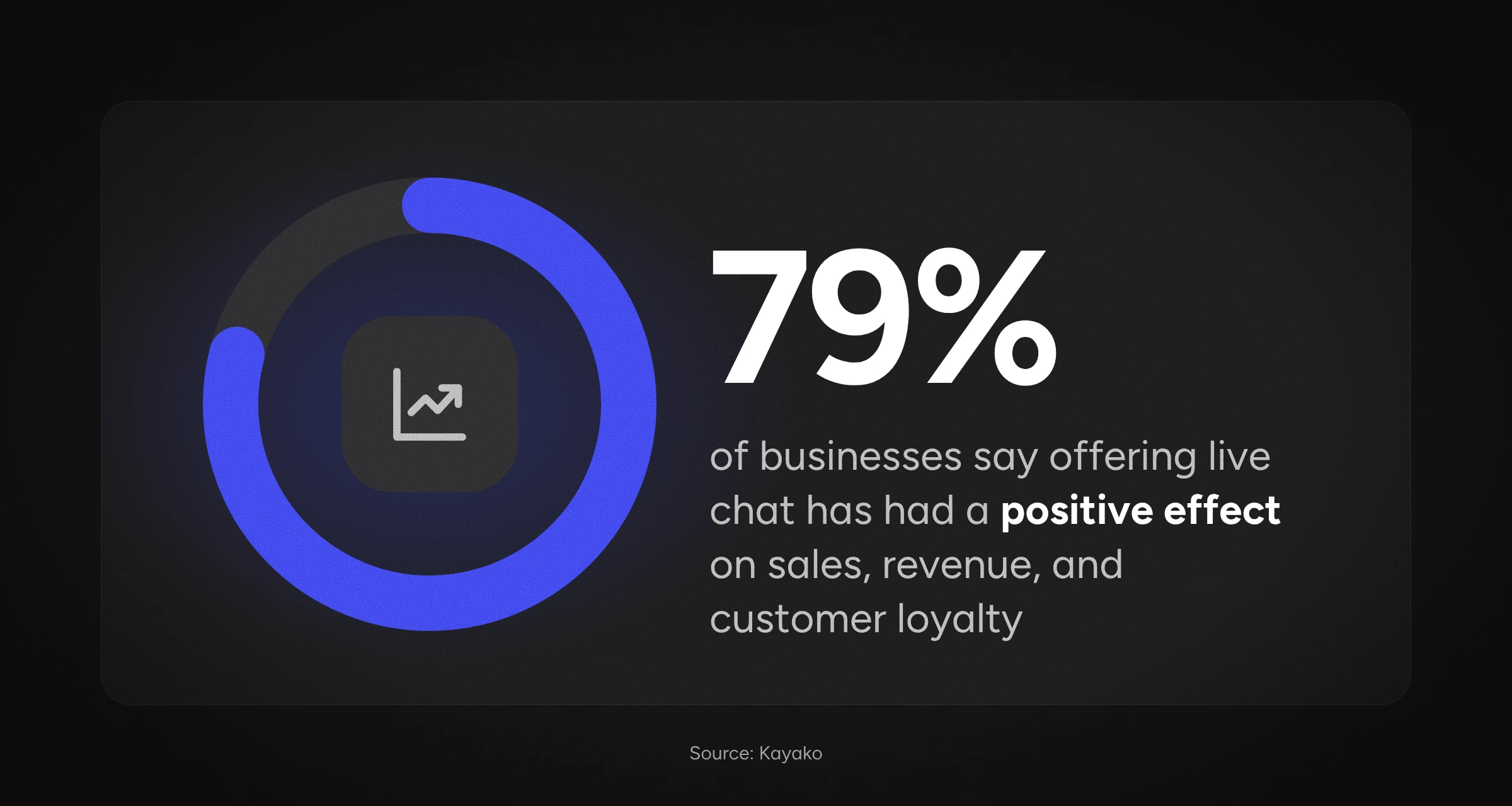
The shift is measurable inside apps, too. In-app messaging drives a median 4.6% of total app revenue, and that share climbs past 13% for top-performing apps (Reteno, State of App Messaging, 2026). And urgency keeps rising: 88% of customers say they expect faster responses today than they did just a year ago (Zendesk CX Trends, 2026). For brands and apps, chat has stopped being a support feature and started being infrastructure the rest of the product gets measured against.
That reframing matters for how apps prioritize chat in the roadmap. A feature that used to compete for budget against other support tools now competes for budget against the app's core engagement loop, because for a growing share of users, chat is the engagement loop.
What users expect from live chat and in-app messaging
Users no longer measure chat against other chat. They measure it against the fastest, most continuous reply they got anywhere that day, on any app.
90% of customers want a reply to a chat message within 10 minutes of sending it, and 60% expect a reply within 2 minutes (Zendesk CX Trends, 2026). 63% now rank speed of response as the single most important factor in a support interaction, ahead of resolution speed (Zendesk CX Trends, 2026). Roughly 60% of chat users abandon a conversation if it goes unanswered for more than 60 seconds, according to recent chat-response benchmarking research.
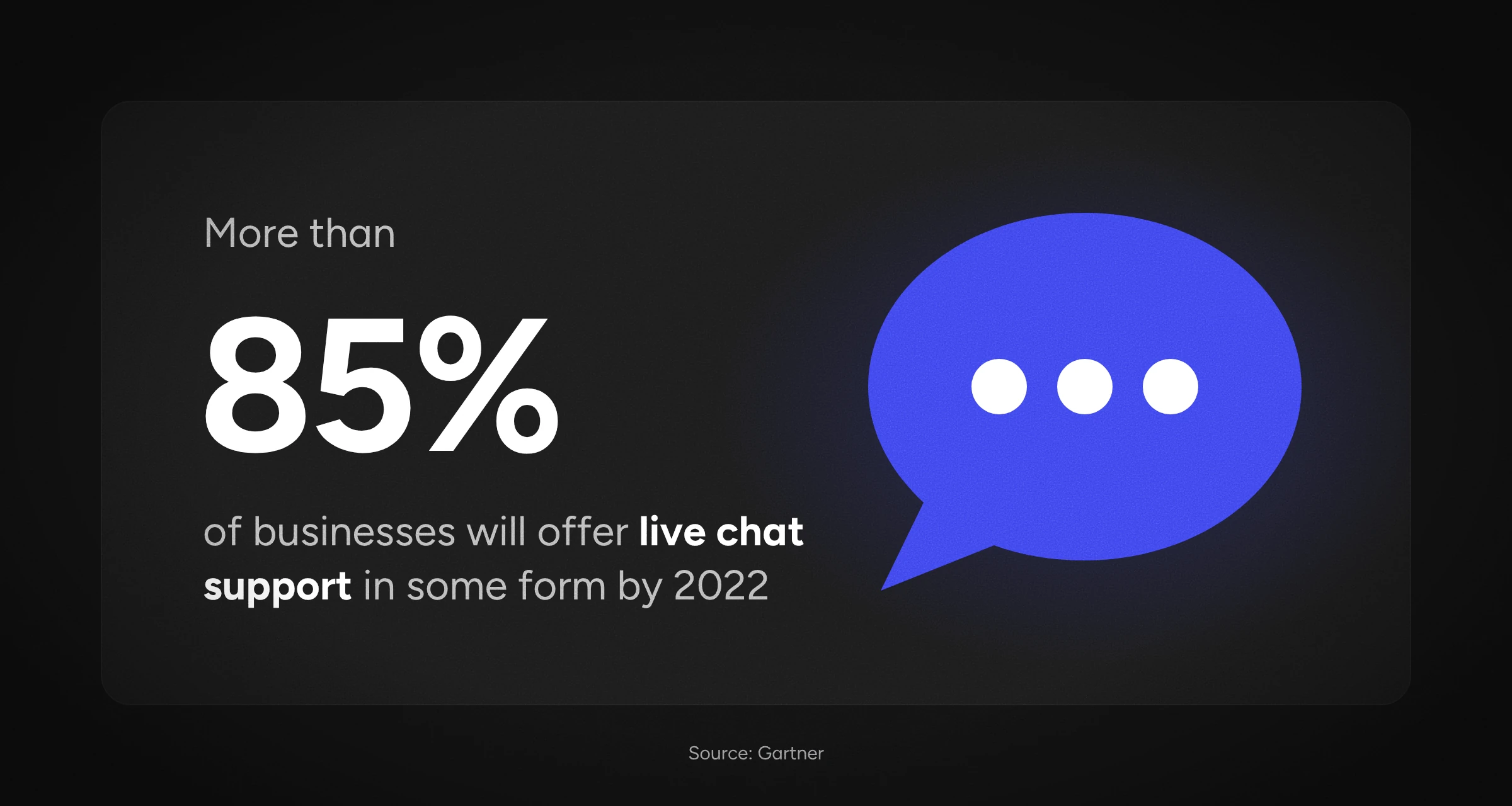
Continuity matters as much as speed. 76% of consumers say they would choose a company that keeps text, images, and video in one continuous conversation thread rather than forcing them to restart across channels (Zendesk CX Trends, 2026). For an app, that means the chat experience has to hold context across sessions and devices, not just answer quickly.
How live chat and in-app messaging affect retention and conversion
Live chat and in-app messaging are consistently associated with stronger engagement and conversion, though the size of the effect depends heavily on how chat is implemented, not just whether it exists.
Users who receive in-app messages show 131% higher engagement than users who receive none (Braze, 2025), and event-triggered in-app messages convert at up to 4x the rate of static, scheduled campaigns (Braze, 2025). On the commerce side, buyers who chat with a brand before purchasing are roughly 40% more likely to complete an online purchase than buyers who never chat (eMarketer, cited 2024), and businesses report up to 48% higher revenue per chat hour once live chat is in place (Forrester, cited 2025).
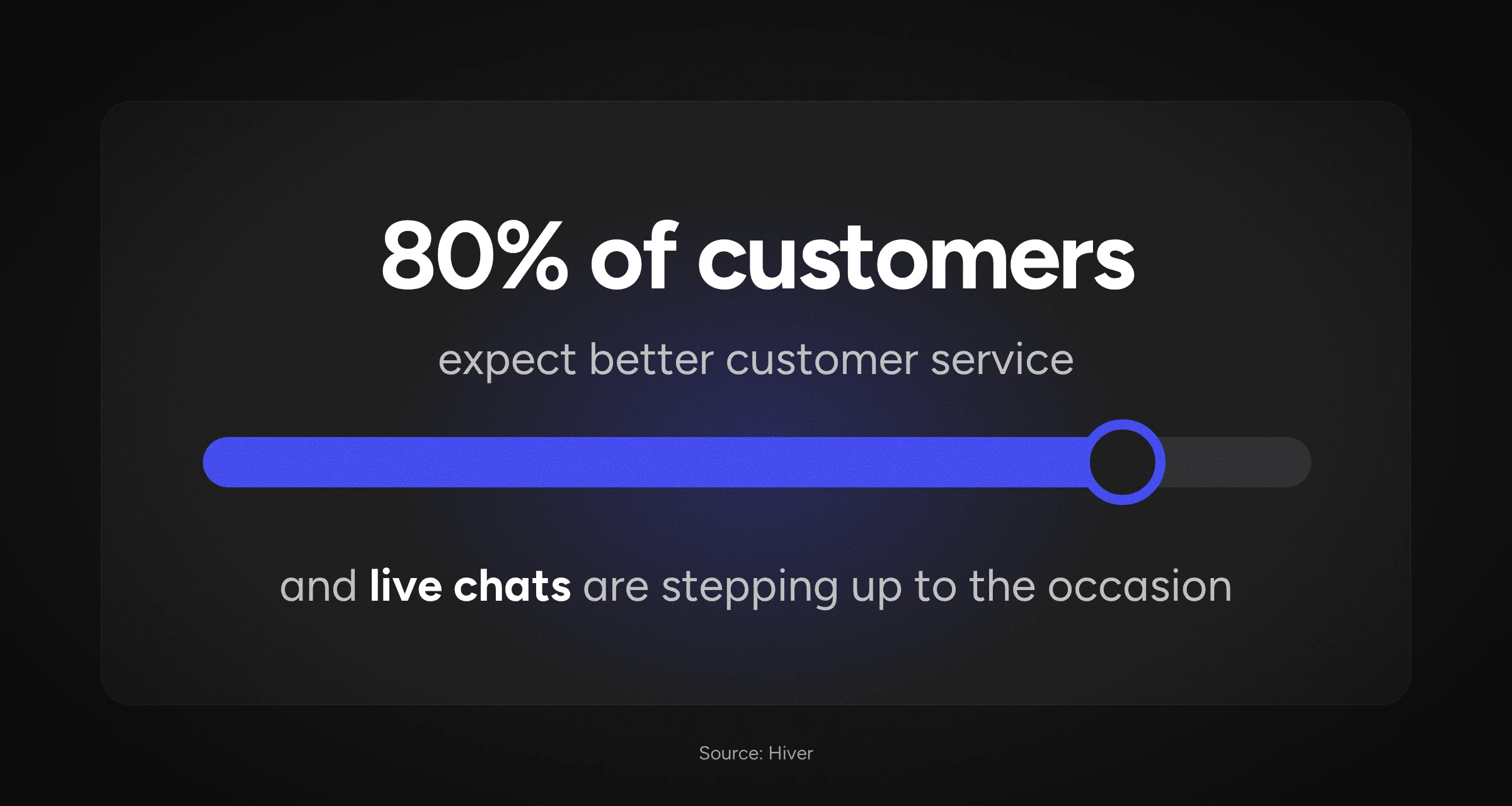
Satisfaction reinforces the pattern: live chat earns an average 88% customer satisfaction rating, the highest of any digital-first support channel (American Customer Satisfaction Index, cited 2025). Community and group engagement inside apps show a similar signal: 18% of organizations now say their community or group features influence more than 30% of revenue (Bettermode, State of Community, 2026). None of this guarantees a specific outcome for any one app. It does show that chat, implemented well, is one of the more reliable levers brands have for engagement.
The distinction that tends to separate strong results from weak ones is whether chat is native infrastructure or a bolted-on widget. Pre-built chat features and chat SDKs that integrate 1-on-1, group, and live chat directly into an app's existing experience tend to sustain these engagement gains longer than a third-party overlay, because users never have to leave the product to use them.
Group chat and community messaging trends shaping 2026
Group chat has moved from a secondary feature to the primary way people communicate inside the apps they already use, and users increasingly expect the same pattern inside branded products.
Telegram crossed 1 billion monthly active users in March 2025, a milestone reached largely on the strength of its group and channel features (Telegram, 2025). WhatsApp carries more than 3 billion monthly active users and upward of 150 billion messages a day, a scale that sets the baseline for what "normal" chat performance looks like to users (industry usage tracking, 2026). Discord, built around persistent group spaces rather than 1-on-1 messaging, surpassed 200 million monthly active users in 2026 (Discord usage tracking, 2026).
Brands are responding by bringing that expectation in-house rather than routing users to third-party platforms. 60% of businesses now own a branded online community, and another 15% plan to launch one, reflecting a broader shift from renting chat on someone else's platform to owning the social layer inside the product itself (Forrester data, cited via Bettermode, State of Community, 2026). For a comparison of how apps make that build-vs-buy call, see our breakdown of the best chat and social feed SDKs for apps.
Key takeaways
- Chat and messaging are now the default interface, not a support add-on: 94.1% of internet users touch a messaging app monthly, and 61% name it their preferred service channel.
- Speed expectations keep tightening. Most users want a reply within minutes, and 88% say they expect faster service than a year ago.
- In-app messaging measurably supports engagement and revenue, with a median 4.6% app-revenue contribution and 131% higher engagement among messaged users, though results depend on implementation.
- Group chat is now the primary messaging pattern on major platforms, and brands are increasingly building that pattern into their own apps rather than relying on third-party channels.
FAQ
Does in-app chat improve retention?
In-app messaging is consistently linked to stronger engagement: users who receive in-app messages show 131% higher engagement than those who don't (Braze, 2025), and messaging now drives a median 4.6% of total app revenue, climbing past 13% for top-performing apps (Reteno, State of App Messaging, 2026). These gains reflect thoughtful implementation and ongoing engagement strategy rather than the mere presence of a chat feature, so results vary by app and use case.
What do users expect from in-app messaging?
Users expect speed and continuity. 90% want a reply to a chat message within 10 minutes and 60% expect one within 2 minutes (Zendesk CX Trends, 2026), and 76% say they'd choose a brand that keeps text, images, and video in one continuous thread instead of forcing them to restart the conversation (Zendesk CX Trends, 2026).
Building chat infrastructure that meets these expectations
Live chat statistics point to one conclusion for brands and apps: the messaging layer inside a product is now measured against the fastest, most continuous chat experience a user has had anywhere, on any app, that week. Meeting that bar consistently is easier to do on infrastructure built for it than by retrofitting a support widget into a product roadmap.
social.plus provides the infrastructure that brands and apps use to ship 1-on-1, group, and live chat natively, without building messaging infrastructure from scratch. To see how it fits your product, book a demo.