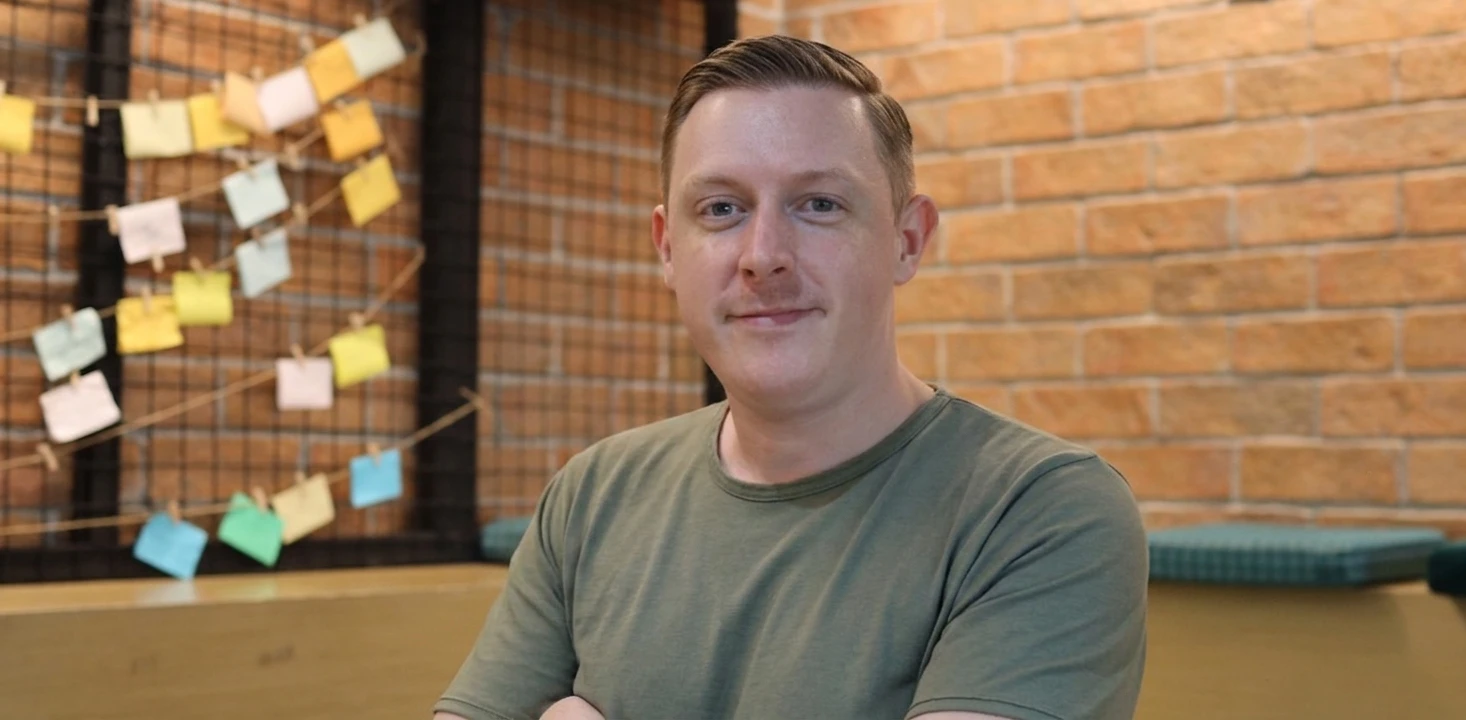
Tell us about yourself — Where are you from, what are your interests, and what were you doing before joining social.plus?
I’m from Italy — from a tiny town in the central part of the country called Perugia. But I’ve been living abroad for many years. I went to Milan for university, then started my career and moved abroad. I lived in Dubai, South Africa, and Indonesia, and eventually in Thailand, where I started the company.
I have many interests — the first one being social.plus. All my friends make fun of me because they say my job is actually my hobby, since I’m always thinking about the company. But I also love to travel and discover new countries. And I love food — trying new dishes is one of my favorite things.
Before social.plus, I was doing something very different. I studied law at university and was working as a legal consultant in a law firm. I started my career on the legal side of things, but then I got a bit bored. I really wanted to work in a startup — a company that was more dynamic — and that’s how I ended up in tech.
Describe your journey at social.plus — How has your role evolved and what does a typical day look like for you?
I joined Eko as head of legal — that was my very first role there, so I came in from the legal side. As head of legal and strategy, we were working on expanding the teams, setting up in new countries, establishing new legal entities, and of course everything related to new products and new businesses. After joining, I built a very good relationship with the leadership and with Korawad, the founder.
Every time there was a need for someone to take care of something else, I would volunteer to help. So I ended up doing a lot of different jobs at the same time. I had finance reporting to me (even though I’m not very good at it), then marketing, then the sales team. I took on all these different things, and eventually I became COO of the company. I had several teams reporting to me — mostly the ones I mentioned — so I was taking care of everything on the business side.
Then we rebranded into Amity and launched the new product that today is social.plus. I ended up taking on responsibilities for social.plus and growing with it — and eventually stepped into the CEO role. So yeah, I’ve done a bit of everything — including moving furniture into the new offices in Milan and TDPK.
A typical day — well, they’re all very different. The good thing is that we’re remote, so I have the flexibility to organize my day however I like. But we have team members everywhere in the world.
My day usually starts quite early because I like to have early morning calls with the US. The first thing I do when I wake up is catch up with my direct reports based in the US. I have my coffee, then a few hours to work on my own schedule and tasks — emails, communications with investors, new clients, and so on — until Europe wakes up.
Right after lunch, my afternoon gets quite busy. I have mostly calls with the Europe-based team and with most of our customers. After that, I always try to work out — it’s very important to keep me sane. Usually I go to yoga, or I play padel in the late afternoon. I’m not an early-morning workout person, I just cannot do it. Then I’ll have a workout and dinner with my husband.
Sometimes I have calls in the evenings. It doesn’t happen every day — maybe once or twice a week I try to have a team call, because evening is the time when everyone from the company can join. I’d say that’s about 50% of my time. The other 50% is when I travel, which is very often — either to attend conferences or to meet existing clients and investors.
I usually try to go for at least a week, like a little road show, and when I travel, I try to meet as many people as possible. Those days are very, very active. But I like this balance between weeks that are calmer and working from home, and weeks where everything is crazy and I change location every day.
What do you love most about your role? And what's the biggest challenge you navigate?
What I love the most is really the people — building this team where you can see people growing, reaching their best selves, and always going to the next level. There are some people I’ve been working with for such a long time, and I love seeing them grow. It makes me very proud. Particularly with new hires, when they decide to stay with us for a year or two.
I also really love meeting so many people externally. Getting to attend all these events and having clients everywhere in the world — I love the fact that social.plus is truly global. That’s something that inspires me and challenges me.
I feel that I learn a lot — that’s probably my favorite thing. What’s been very challenging is learning by doing, because there’s really nobody in the company who has done this before. We’re all pretty young on average. I’ve never been CEO of a tech company before — I’ve never even been in tech before.
I can’t really get a lot of input from people who’ve been there before, so we have to keep trying and be very open-minded — working on ourselves and sometimes accepting that we made a mistake. In my role, of course, it’s sometimes challenging because there’s a lot of pressure, and I’m always thinking, “Oh my God, what am I doing? Is it right? Is it wrong?” But the good thing is that there’s always space to make mistakes. There’s no culture of “you can never make mistakes.” It’s important to understand them and rectify them. Overall, I think we can navigate that.
What are your favorite perks of working remotely at social.plus — and how has remote-first working shaped the way you work and live?
I really love working remotely. I love it. And it’s not because I don’t like spending time with people — I actually love spending time with people. But I feel that having people commute to the office every day comes with a lot of constraints: time spent in traffic, sometimes very little time to dedicate to your family or personal things because you’re commuting for the company. It also comes with a lot of cost, because if you’re a global company like social.plus, you have to have many different offices around the world.
In general, I believe in remote-first because it allows everybody to be more flexible, and it allows the company to hire from a talent pool that is truly global. We’re not stuck to looking only in a certain country or certain cities. All these are reasons why I love working remotely. I feel that I’m more productive when I can just wake up, get dressed, and sit in front of a laptop.
Or potentially take that laptop and go work from another city for a few days to be out in nature. It gives you more flexibility. At the same time, I really, really believe that it’s super important to spend time together. That’s why we have a sport benefit in all the cities where we have people — we sponsor sport activities for them to do together, we try to have offsites, and we bring different departments together for events.
We value enormously the time we spend together, but we want that time to really be for team building and building relationships — not just to work side by side and not talk to each other.
I also think that remote work can’t apply to every company. It works very well for social.plus because our company is built on a very measurable OKR system. Many founders I know say, “I want to have people in the office, otherwise I can’t make sure they work.”
For me, that doesn’t make sense. I don’t need to make sure people work — I trust that they will. And it’s very measurable: everybody has OKRs, and at the end of the quarter, I can see what value you brought to the table. If the value is there, I don’t really care how long you work, where you work from, or if you want to work in pajamas. As long as you’re professional, you join your calls, and you deliver value, that’s more than enough for me. I want everybody to deliver that value in the modality they’re most comfortable with, as long as they do it.
How would you describe what social.plus does to a friend VS to a 5-year-old?
I usually say that what we provide is the tech equivalent of LEGO pieces. They’re little bricks that can be added to any existing app or website to add capabilities. What we specialize in is social and community capabilities — all the features that allow people inside an app to connect with each other.
The ability to chat, comment, join discussion forums — that’s what social.plus provides. Pre-built capabilities that you can add very easily to your app. That’s what I would say to a friend, and usually they understand.
To a five-year-old, it’s a little more complicated. I would say, “Hey, you know when Mom and Dad spend a lot of time on the phone and they chat and scroll and do all those things? That’s what we do. We build those things for the phone, and we keep people engaged online.”
Community is at the heart of what we build - what does "community" mean to you personally?
It means belonging. It’s feeling part of something. I think communities are one of the most powerful forces in the world, because the power of people when they come together and support each other — or work well together toward a common goal — is really magnified compared to the power of one individual. That’s why I really believe in communities, and I really love the power of digital communities — because sometimes it’s hard.
For example, if you’re from a tiny village, it can be hard to find people who have something in common with you. Sometimes people feel lonely. But what the internet and the digital world have allowed us to do is break the barrier of physical proximity and find like-minded people — people who feel what you’re feeling, or understand what you’re going through, anywhere in the world. That’s very, very powerful.
I love to think of social.plus as a tool to enable this community engagement.
What drew you to the tech industry? What's one piece of advice you'd give someone just starting out?
What drew me to the tech industry is for sure the innovation and the speed. As I said, I was coming from the legal industry, which by definition is very slow and bureaucratic — things don’t change very fast. I’ve always been curious and wanted to be at the front of change and new technologies, and that’s what really drew me to startups and to tech.
The advice I would give to someone who is fascinated by this industry but doesn’t know where to start: you don’t need to be a developer to work in tech or to work in a startup, and you don’t need to have a specific profile. The cool thing about tech is that it’s so broad and so inclusive — we call “tech” so many different things.
There’s tech to deliver food, tech to do online financial transactions, tech to plant trees — even that. Whatever your skill set, your degree, and what you studied, there is space somewhere in tech for anyone. So I would say: don’t give up, and don’t feel that you don’t have the right profile to belong in tech.