

Product tagging in posts is one of those features that can either add genuine value to your community or quietly erode it. The difference comes down to one thing: whether the tag feels like a natural part of the content or an interruption of it.
When tagging is done well, members do not notice the mechanics of it. They see a post about something they care about, notice a product mentioned or shown in context, tap the tag out of genuine curiosity, and land exactly where they need to be. The experience is frictionless because the product belongs in the content.
When tagging is done poorly, the community starts to feel like a catalogue. Posts that exist only to surface products, tags dropped into content where the product has no real connection to what is being discussed, a feed where every third post is shoppable. Members tune it out. Engagement drops. The commercial layer that was supposed to add value starts to work against the community it relies on.
This guide covers how to tag products in a way that serves both the content and the commerce.
Tags Follow Content, Not the Other Way Around
The most important principle in product tagging strategy is the simplest one. Content comes first. A post should be written, filmed, or published because it is genuinely useful, interesting, or relevant to your community. If a product fits naturally into that content, it earns a tag. If it does not, it does not get one.
This sounds obvious, but it runs counter to how most teams initially approach tagging. The instinct is to work backward from the product: identify what you want to surface, then build content around it. That produces posts that read like ads, because structurally they are ads. Members who have joined a community for connection, information, or entertainment recognize the difference immediately.
Authenticity is the operating condition of social commerce. Shoppable content that integrates products into real-life scenarios and genuine conversations consistently outperforms overtly promotional content. The tag is the mechanism. The content is what earns the click.
Which Posts Earn a Tag

Not every post is a candidate for product tagging, and that restraint is part of what makes the tags that do appear feel meaningful. The question to ask before tagging any post is simple: does this product add something to this content, or is this content just a vehicle for the product?
Posts that earn a tag naturally
- How-to and tutorial content: A post walking members through a process that involves a specific product is the clearest case for tagging. The product is part of the instruction. Tagging it connects members directly to what they just learned about.
- Community discussion about a product category: When members are already talking about a topic and a specific product is relevant to that conversation, a tag from a community manager adds real value. It answers the implicit question 'where do I get that' without anyone having to ask.
- Content that shows a product in use: Video posts, image posts, and mixed-media posts that actually demonstrate or feature a product in a real context are natural candidates. The product is visible and in context. The tag is expected.
- Event and launch content: A post promoting a new arrival, a limited drop, or a product moment inside the community is straightforwardly commercial and members understand that. Tagging the product is appropriate and expected.
Posts that do not earn a tag
- Community discussion posts with no product connection: A thread about a topic that happens to be adjacent to a product category is not an invitation to tag products. Members who came to discuss something and find themselves looking at product tags in unrelated content lose trust in the community experience.
- Emotional or personal content: Posts that touch on member experiences, challenges, or milestones should never have product tags attached. The context makes the commerce layer feel exploitative rather than helpful.
- Content where the connection requires a stretch: If explaining why a product is relevant to a post requires more than one sentence of justification, the connection is probably not strong enough. Tags should be self-evident.
- A useful ratio to maintain: Industry practice across social commerce platforms suggests keeping shoppable content to roughly 20 to 30% of total posts to avoid feed fatigue. In a community context, where the primary value is connection rather than commerce, staying at the lower end of that range preserves the community feel while still creating meaningful commercial touchpoints.
How Many Tags Per Post
Fewer tags perform better than more. This is a consistent finding across social commerce contexts and it makes intuitive sense: a post with one or two relevant tags feels curated, a post with five or more feels like a product dump.
One to three tags per post is the range that balances discoverability with readability. Even on platforms that allow significantly more, posts with fewer targeted tags consistently drive stronger click-through than heavily tagged content. More tags does not mean more engagement. It often means less, because the value of each individual tag is diluted.
For video posts, the same principle applies. Tag the product that is the focus of the content, not every product that appears in the frame. A fitness video demonstrating a specific piece of equipment should tag that equipment. Tagging every visible product in the background turns the content into a storefront walk-through, which is a different kind of content entirely.
Tagging Across Post Types
Product tagging works differently across text, image, video, and mixed-media posts, and the strategy should adapt accordingly.
Text posts: Tagging in a text post works best when the post is explicitly about the product or product category. A community manager writing a post about a new arrival, answering a frequently asked question, or sharing context about a product's background has a clear reason to tag. Tagging products in text posts that are primarily about something else feels jarring because there is no visual anchor for the tag.
Image posts: Images are the clearest case for tagging because the product is visible. The tag should correspond to what is actually shown. A product that appears prominently in the image is a natural tag. A product that is tangentially related but not pictured is not.
Video posts: Video is where product tagging has the highest potential and the highest risk. A video that demonstrates a product in use, explains how it works, or features it in a genuine context earns the tag. A video that is primarily community content, a conversation, a discussion, a tour, with products tagged as an afterthought, typically sees low engagement on those tags because the viewer's attention is on the content, not on shopping.
Mixed-media posts: The same principle applies across formats: tag what is genuinely featured, not what is present or adjacent. Mixed-media posts that combine text and visuals often give more context for a tag, which can strengthen the connection between the content and the product.
Using Views and Clicks Data to Improve Your Tagging
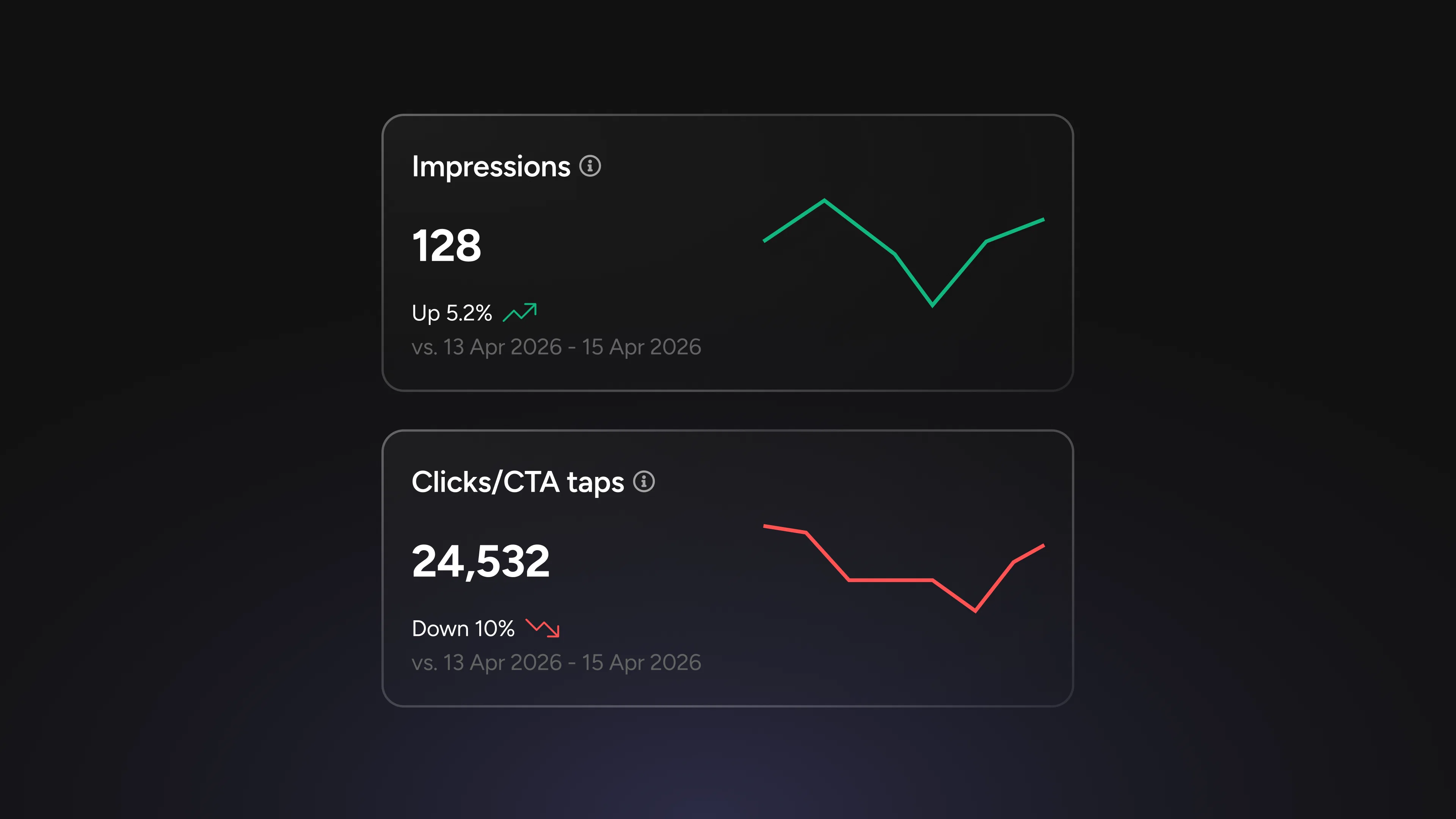
Product tagging generates two metrics that are worth tracking consistently: product views and product clicks. Together they tell a more complete story than either does alone.
Product views tell you how many members saw the tagged product appear in their feed as part of a post. This is a reach metric. High views with low clicks often signals a mismatch between the content and the product: members saw the tag but were not compelled to engage with it.
Product clicks tell you how many members actively tapped through to the product page. This is your intent signal. A post with a strong click rate on its product tag is telling you that the content context made the product feel relevant and desirable.
The pattern to look for over time is which content types, topics, and formats consistently produce strong click rates on their tags. That pattern is your tagging strategy. If tutorial videos drive significantly more clicks than discussion posts, more of your tagging effort should go into tutorial video content. If posts about a particular product category consistently outperform others, that category deserves more visibility in your tagging cadence.
The inverse is equally useful. Posts with high views and low clicks are showing you where the tag felt out of place. Review those posts for the content-to-product connection. If the tag was a stretch, the data is confirming it.
- One thing to watch for: A product that is generating strong clicks but low conversion after tap-through often points to a catalogue issue rather than a tagging issue. Broken URLs, outdated prices, or out-of-stock status on the product page breaks the experience after the member has already shown purchase intent. This is where catalogue maintenance directly affects tagging performance.
For Community Managers: How to Enhance Existing Posts With Tags
Product tagging is not only a forward-looking practice applied to new posts. The console allows community managers to enhance existing posts with product tags, which opens up a useful ongoing workflow.
High-performing posts that were published before the product catalogue was live are candidates for retroactive tagging. A post that generated strong engagement around a topic connected to a specific product can be tagged after the fact, extending its commercial value without requiring new content.
When reviewing past posts for tagging candidates, apply the same criteria: does the product fit naturally in this content, or would the tag feel inserted? The same standards that apply to new posts apply to existing ones. A post that earned strong community engagement because of its authenticity should not be undermined by a tag that makes it feel retrospectively commercial.
The data from retroactively tagged posts is worth tracking separately. It helps you understand whether the engagement a post earned in the community translates into product intent, which is a meaningful data point for understanding how your community's content activity connects to commercial outcomes.
The Standard Worth Holding
Product tagging is a long-term practice, not a one-time setup. The communities that build the most effective commerce layer inside their content are the ones that maintain a consistent standard over time: tags that earn their place, content that leads the commerce, and data that guides where to invest the effort next.
Members who trust the tags in a community's content are more likely to click through, more likely to return, and more likely to share. That trust is built post by post, over time, by the simple discipline of only tagging what genuinely belongs.