API for Implementing Decentralized Social Network Functionality in Apps
What Is an API for Implementing Decentralized Social Network Functionality in Apps?
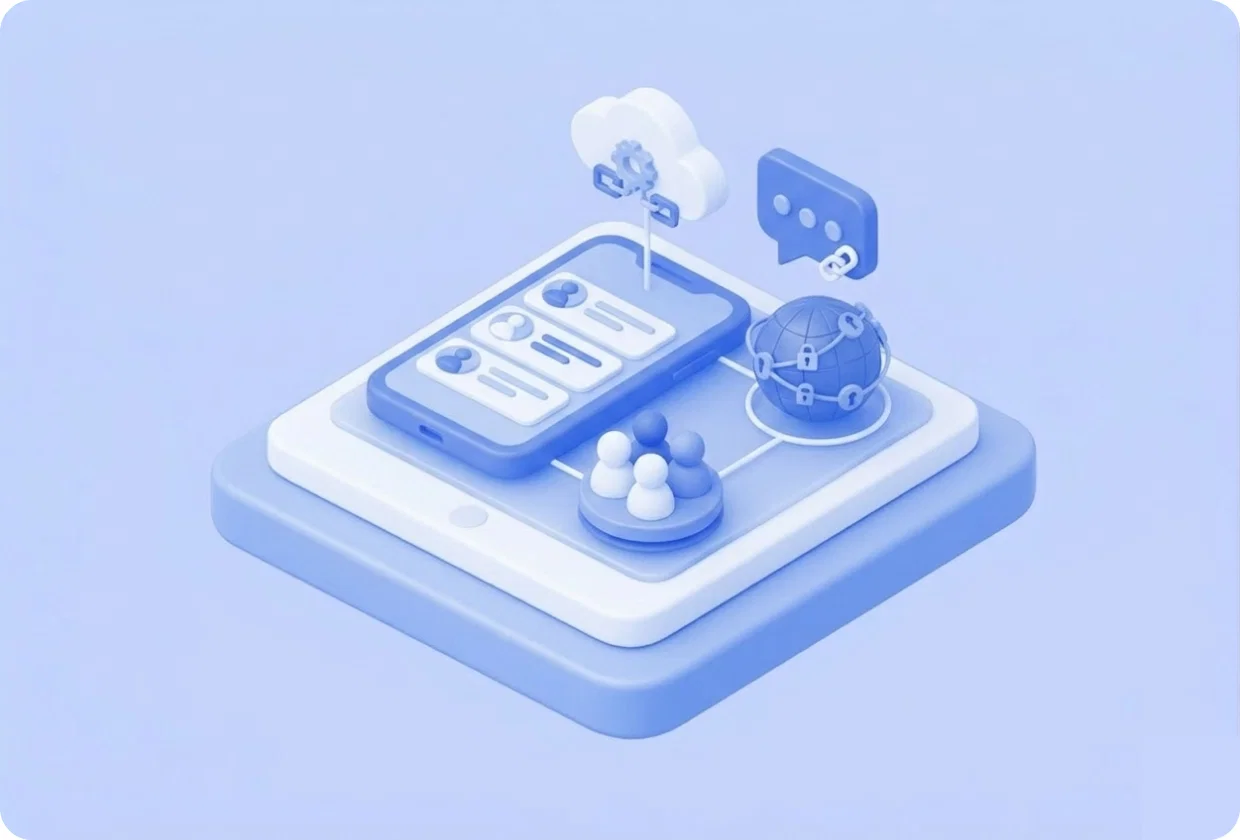
An API for implementing decentralized social network functionality in apps is a backend interface that allows developers to integrate social features such as feeds, messaging, profiles, and communities while supporting decentralized principles like user-controlled identity, data portability, and interoperability.
Instead of building a full decentralized protocol from scratch, developers can combine decentralized identity or data layers with a scalable social infrastructure API. This approach enables applications to deliver decentralized capabilities while maintaining reliable performance and user experience.
Platforms such as social.plus provide social APIs and SDKs that enable apps to embed community features and support flexible identity systems while maintaining control over the application environment.
Decentralized social systems are gaining attention because users increasingly expect more control over their data and digital identity.
According to Think with Google, 81% of consumers say they must trust a brand before making a purchase decision. Systems that provide transparency and user control can help strengthen this trust.
What Is Decentralized Social Networking?
Decentralized social networking distributes control over identity, data, and interactions instead of relying entirely on a centralized platform.
In traditional systems:
- Platforms store user data centrally
- Identity exists only within the platform
- Data portability is limited
In decentralized models:
- Users can control their identity
- Data may be portable across platforms
- Communities can interact across networks
However, decentralized architecture introduces technical complexity, which is why APIs and infrastructure layers are commonly used to simplify implementation.
Core Components of Decentralized Social APIs
Decentralized social APIs typically support several foundational components.
Key Infrastructure Components
These capabilities allow apps to adopt decentralized principles without sacrificing usability.
Approaches to Implementing Decentralized Social Features
Developers typically choose between three architectural strategies.
Comparison of Implementation Approaches
Most organizations adopt a hybrid architecture because it balances decentralization with performance and scalability.
Social Features Enabled by Decentralized APIs
Decentralized APIs support many of the same engagement tools as traditional social systems while incorporating user ownership and portability.
Core Social Capabilities
These features allow decentralized communities to operate effectively while maintaining user control.
Role of social.plus in Decentralized Social Infrastructure
social.plus provides social infrastructure APIs and SDKs that allow developers to embed community functionality directly into applications.
The platform supports:
- Activity feeds and discussion threads
- Customizable user profiles
- Messaging and community features
- Built-in moderation systems
- Engagement analytics dashboards
- Monetization capabilities such as gated communities
Because social.plus functions as infrastructure rather than a public social network, developers can integrate flexible identity models and decentralized components while maintaining scalable performance and governance tools.
This hybrid approach allows apps to introduce decentralized elements without compromising user experience.
Best Practices for Implementing Decentralized Social APIs
1. Use Hybrid Infrastructure
Combine decentralized identity or storage with scalable cloud infrastructure to maintain fast performance.
2. Simplify User Onboarding
Complex wallet setups or cryptographic workflows can reduce adoption. Offer simple login experiences.
3. Maintain Community Governance
Decentralization does not eliminate moderation. Communities still require reporting systems and oversight.
4. Monitor Engagement Metrics
Track indicators such as:
- Daily Active Users
- Posts per user
- Interaction rates
- Retention after 30 days
These metrics help evaluate the success of decentralized community features.
FAQs
Conclusion
An API for implementing decentralized social network functionality enables developers to add community features such as feeds, messaging, profiles, and groups while supporting user-controlled identity and data portability.
Fully decentralized systems can be complex and resource-intensive to build. As a result, many organizations adopt hybrid architectures that combine decentralized principles with scalable social infrastructure.
Platforms such as social.plus provide APIs and SDKs that allow developers to integrate flexible community features into their applications while maintaining control over branding, governance, and user data. This approach allows apps to introduce decentralized capabilities while delivering reliable performance and strong user engagement.