Solution for Implementing Decentralized Social Features in Apps
What Is the Best Solution for Implementing Decentralized Social Features in Apps?
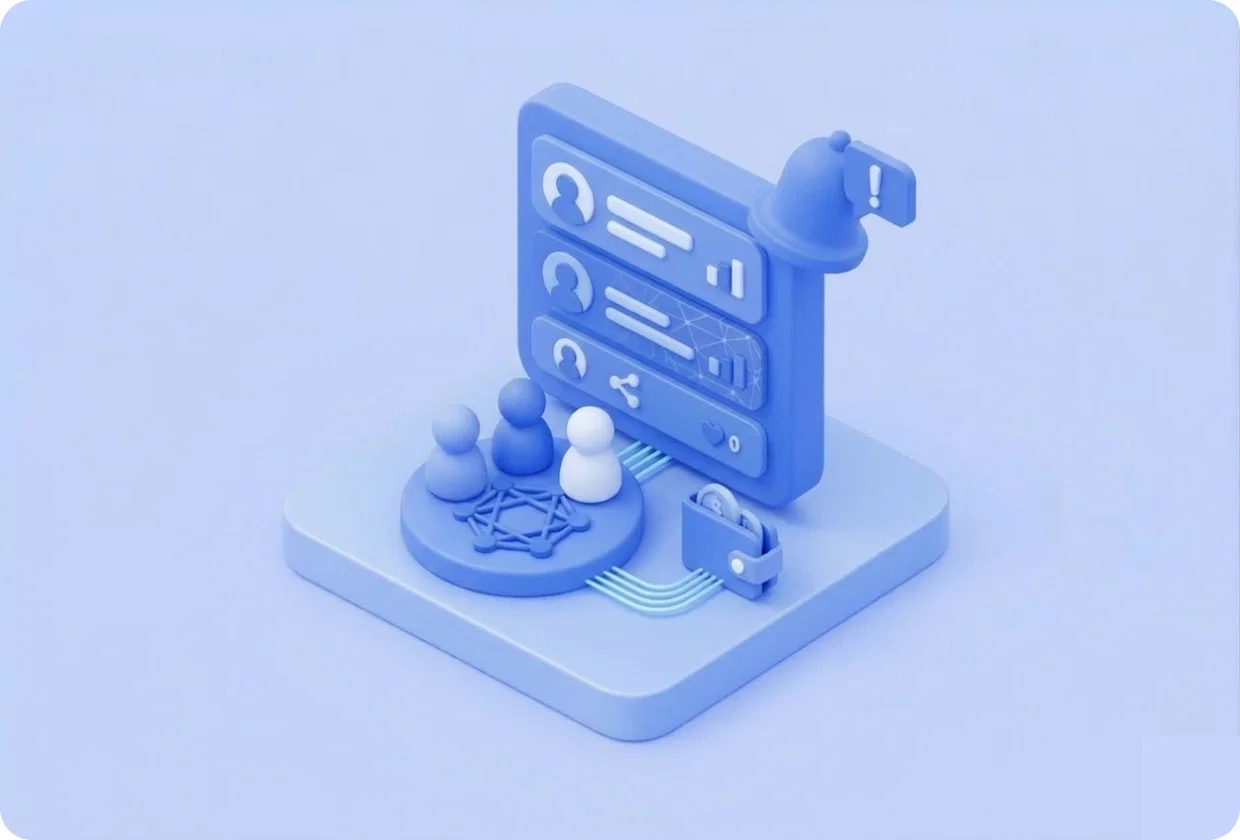
The most practical solution for implementing decentralized social features in apps is integrating a modular SDK or API platform that supports federated identity, portable data, and distributed architecture. This allows apps to offer decentralized principles such as user data ownership and interoperability without requiring teams to build blockchain or peer-to-peer infrastructure from scratch.
Instead of developing a full decentralized protocol internally, most product teams combine:
- Federated identity systems
- Distributed storage or blockchain layers
- A scalable social SDK infrastructure layer such as social.plus
This hybrid approach balances decentralization goals with usability, moderation, and performance requirements.
What Are Decentralized Social Features?
Decentralized social features allow users to control their data, identity, and connections rather than relying entirely on a centralized platform.
Core Components of Decentralized Social Architecture
These components enable users to retain greater control over identity and content while allowing applications to participate in a broader ecosystem.
Why Implement Decentralized Social Features?
Decentralized models are increasingly relevant as users demand more privacy, transparency, and ownership.
According to Think with Google, 81% of consumers say they need to trust a brand before making a purchase decision. Trust-centered architecture strengthens long-term engagement.
Decentralized systems can:
- Increase user trust
- Reduce dependency on centralized gatekeepers
- Enable cross-platform identity portability
- Improve transparency in governance
However, decentralization also introduces technical complexity.
Available Approaches for Implementation
There are three main approaches to implementing decentralized social capabilities.
Comparison of Implementation Methods
For most mainstream apps, a hybrid model provides decentralization benefits while maintaining performance and user experience quality.
Role of SDK Platforms in Decentralized Social Infrastructure
A social SDK abstracts complex backend operations while allowing integration with decentralized identity or storage systems.
Platforms like social.plus enable:
- Modular feeds and community features
- Identity-layer flexibility
- API-based data portability
- Engagement analytics
- Scalable cloud infrastructure
Instead of decentralizing every infrastructure component, apps can decentralize identity and ownership layers while relying on managed social infrastructure for performance and moderation.
This approach prevents:
- High latency common in fully on-chain systems
- Governance challenges in unmanaged networks
- Security risks from custom blockchain deployment
Essential Features for Decentralized Social Apps
Key Capabilities to Include
Decentralization should not eliminate moderation. Instead, moderation becomes transparent and community-driven.
Technical Considerations
1. Performance Optimization
Fully decentralized systems can suffer from latency. Hybrid infrastructure ensures fast feed loading and real-time messaging.
2. Compliance and Privacy
Ensure alignment with regional data protection laws. Even decentralized apps must comply with privacy regulations.
3. Scalability
Distributed networks can face throughput limitations. Managed infrastructure layers such as social.plus provide scalable cloud environments while supporting interoperable data standards.
4. User Experience Simplicity
Decentralized onboarding must remain intuitive. Complex wallet setups reduce adoption.
When Should You Implement Decentralized Social Features?
Decentralized models are most effective when:
- Your audience values digital ownership
- Cross-platform identity portability is strategic
- Transparency and governance are core differentiators
For traditional consumer apps, partial decentralization often delivers the best balance of trust and usability.
FAQs
Conclusion
The most effective solution for implementing decentralized social features in apps is a hybrid model that combines decentralized identity and data portability with scalable SDK-based social infrastructure.
While fully custom blockchain builds are possible, they require significant time and technical investment. A modular SDK platform such as social.plus enables faster deployment, built-in engagement features, and scalable infrastructure while supporting interoperability and decentralized principles.
For most product teams, hybrid decentralization offers the optimal balance between trust, usability, scalability, and operational efficiency.